



Featured image credit: Roscosmos
Liftoff Time | March 23, 2024 – 12:36:10.573 UTC | 15:36:10.573 MSK |
|---|---|
Mission Name | Soyuz MS-25, crewed flight to the International Space Station (ISS) |
Launch Provider | Roscosmos |
Customer | Roscosmos |
Rocket | Soyuz 2.1a |
Launch Location | Launch Complex 31/6, Baikonur Cosmodrome, Kazakhstan |
Payload mass | TBD, but about 7,000 kg (15,400 lb) (for the whole spacecraft) |
Where did the spacecraft go? | To the ISS in a circular low-Earth (LEO) at ~419.5 km (~260 mi) altitude, and 51.6 degrees inclination; initial orbit, but about 350 km (~220 mi) by 51.64 degrees |
Did they attempt to recover the first stage? | No. The Soyuz 2.1a does not feature this capability |
Where did the first stage land? | The boosters will crash into the steppes of Kazakhstan |
Did they attempt to recover the fairings? | No. The Soyuz 2.1a does not feature this capability |
Wre these fairings new? | Yes |
This was be the: | – 56th orbital launch attempt of 2024 – 2nd launch from the Baikonur Cosmodrome in 2024 – 75th launch of a Soyuz 2.1a overall – 2nd launch of a Soyuz 2.1a in 2024 – 156th launch of a Soyuz spacecraft overall – 1st launch of a Soyuz spacecraft in 2024 |
Where to watch | Hatch opening’s official replay by Roscosmos Docking to the ISS’ official replay by Roscosmos Roscosmos’ official replay of launch NASA’s official replay of launch Roscosmos’ official technical replay of the launch abort NASA’s official hosted replay of the launch abort |
What’s All This Mean?

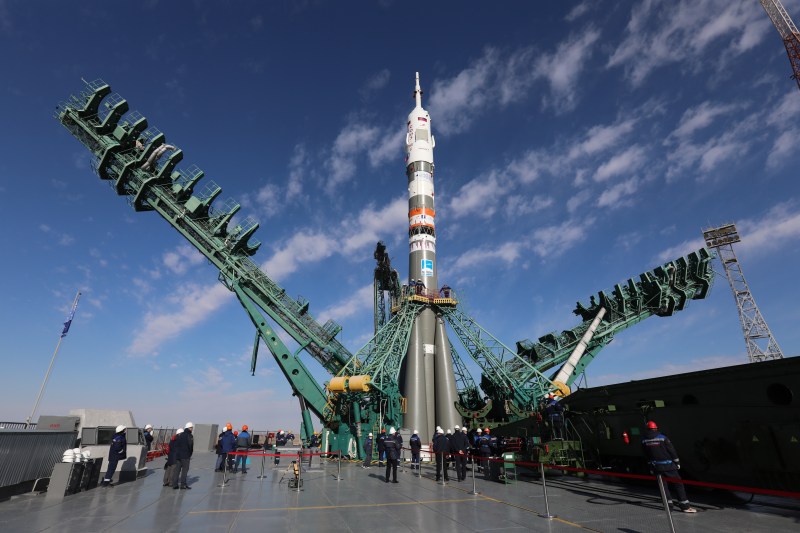
Roscosmos prepares to launch another crewed mission to the International Space Station (ISS): Soyuz MS-25. That is, three new crew members travel inside the capsule, i.e., Novitsky, Vasilevskaya, and Caldwell-Dyson, expecting to join Expedition 70’s members already on the station. In order to do this, a Soyuz 2.1a rocket readies to haul the spacecraft to space, lifting off from Kazakh territory. Starting point for this flight lies specifically on Launch Complex 31/6, at the Baikonur Cosmodrome.
Once the launch vehicle completes all of its expected tasks, the crewed vessel will begin its flight by means of its own propulsion. After a two-day long flight (50:34 h,34 orbits), the Soyuz spacecraft is expected to dock to the nadir port of the Prichal node module, UM, in the Russian section of the ISS. Officials expected this event to occur on March 25 at 15:09:32 UTC, with hatch opening taking place a few hours later. Finally, the Soyuz MS-25 ship will remain in orbit for 184 days.
How Did It Go?
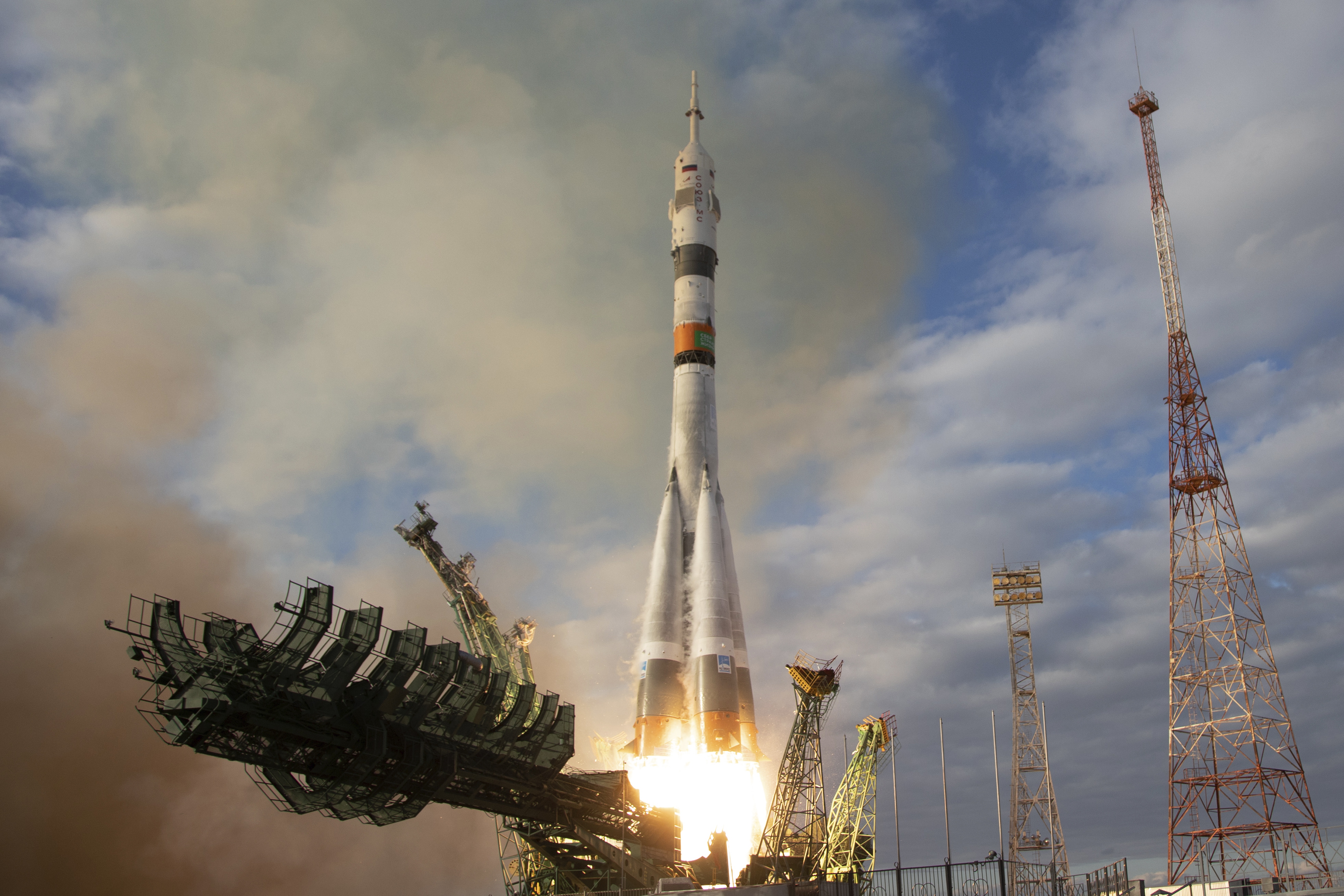
Right on time, the Soyuz rocket ignited its engines and roared off the launch complex in Kazakhstan, commencing the journey of the Soyuz MS-25 spacecraft and its crew. All of the milestones were subsequently achieved, featuring a beautiful Korolev cross at side boosters separation, as well as performing the rest of the separation events, and fairing and escape tower jettisoning. Finally, the second core stage released the piloted vessel which deployed its solar panels, achieving a fully successful launch.
Currently, Soyuz MS-25 has already completed the three-day journey with its final destination being the orbital laboratory. Docking took place on March 25 at 15:03 UTC, while hatch opening occurred some time later at 17:26 UTC.
Soyuz MS-25 Mission
The Soyuz MS-25 crew is comprised of a Russian cosmonaut, Novitsky, a Belarusian cosmonaut, Vasilevskaya, and the US astronaut, Caldwell-Dyson. Acting as backup crew, are a Russian cosmonaut, Vagner, a Belarusian cosmonaut, Lenkova, and a US astronaut, Pettit.
Commander: Oleg Novitsky
Oleg Viktorovich Novitsky, born on October 12, 1971, is a former Lieutenant Colonel in the Russian Air Force and a Russian cosmonaut with Roscosmos. Novitsky has logged over 700 hours of flight time and received awards for bravery. He is skilled in piloting aircraft such as the L-39 and Su-25. Additionally, he is a qualified paratroop instructor and military diver.
Novitsky graduated from the Borisoglebsk Military Pilot School and later the Yuri Gagarin Air Force Academy. He served in various positions in the Russian Air Force, including as a pilot and air squadron deputy commander. Novitsky has participated in multiple space expeditions, accumulating more than 531 days in space as a Russian cosmonaut with Roscosmos.
Spaceflight Log:
- Soyuz TMA-06M: launched on October 23, 2012; returned on March 16, 2013; part of Expeditions 33/34.
- Soyuz MS-03: launched on November 17, 2016; returned on June 2, 2017; part of Expeditions 50/51.
- Soyuz MS-18: launched on April 9, 2021; returned on October 17, 2021; part of Expeditions 64/65.


Flight Engineer 1: Marina Vasilevskaya
Marina Vitalyevna Vasilevskaya is a flight attendant for Belavia Airlines in Belarus. In December 2022, she was selected as one of the six applicants out of thousands to participate in the “Belarusian Woman in Space” project. Marina will become the first woman from this country to orbit the Earth, taking part on a short-duration mission to the ISS aboard the Soyuz MS-25 mission. She will spend approximately 12 days on the ISS before returning to Earth with Novitsky and NASA astronaut Loral O’Hara on the Soyuz MS-24 ship.
Her background as a flight attendant and flight instructor, brings valuable skills and experience to her role as a member of the prime crew for this mission. She has a passion for interior design and diverse interests, such as swimming, aerobics, badminton, tennis, and gardening.
Flight Engineer 2: Tracy Caldwell-Dyson
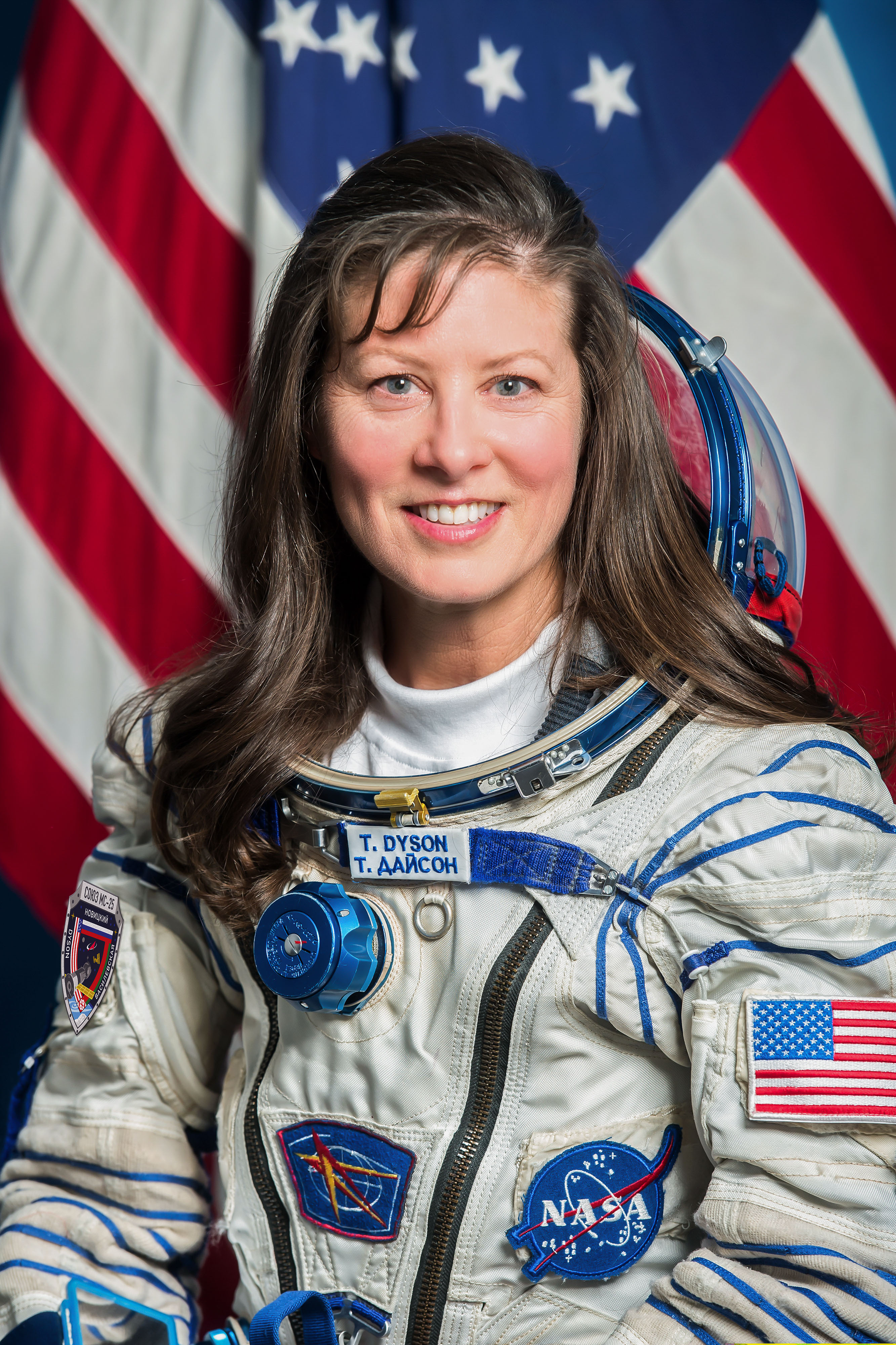
Tracy Caldwell-Dyson is an US chemist and NASA astronaut known for her contributions to space exploration. With a background in athletics and a passion for science, she has excelled in both academia and her astronaut career. Her expertise lies in atmospheric chemistry, where she conducted groundbreaking research on surface reactivity and kinetics of metal surfaces.
As an astronaut, Caldwell-Dyson has participated in multiple space missions, including being a mission specialist on a mission and serving on the ISS in two previous Expeditions. She has three spacewalks under her belt and over 22 hours of extravehicular activity. Benefiting from her experience, the US astronaut will presently be a crew member on the orbital laboratory for six months.
She joined NASA in 1998 and underwent extensive training to become an astronaut. During her many years of service, she was assigned various roles, including the position as a spacecraft communicator (CAPCOM). Additionally, Caldwell-Dyson played a vital role in supporting space shuttle and space station operations from Mission Control. She also led projects to enhance training and operations on the ISS, and developed the EVA Qualification training flow for astronaut candidates, as well as performing as a NASA TV host.
Spaceflight Log:
- STS-118: launched on August 8, 2007; returned on August 21, 2007; during Expedition 15.
- Soyuz TMA-18: launched on April 2, 2010; returned on September 25, 2010; part of Expeditions 23/24.
Zero-G Indicator
For the Soyuz MS-25 mission, a plush dog acts as the Zero-G indicator, inspired by a Soviet cartoon character.

Soyuz MS-25’s Campaign
- 2023-07-23: start of eight-month training for Belarusian cosmonaut Marina Vasilevskaya and pediatric doctor Anastasiya Lenkova for the Soyuz MS-25 mission.
- 2023-09-11: arrival of the Soyuz 2.1a rocket at Baikonur for the Soyuz MS-25 mission.
- 2023-09-14: delivery of Soyuz MS-25 spacecraft to the launch site from RKK Energia.
- 2024-01-25: return of the spacecraft from the anechoic chamber after testing of radio equipment.
- 2024-02-07: placement of Soyuz MS-25 spacecraft into the vacuum chamber for air leak checks; tests last until 2024-02-13.
- 2024-02-19: delivery of the emergency escape system for this mission to the launch site.
- 2024-02-27: routine test of the ship’s solar panels.
- 2024-03-06: connection of boosters to the core stage of the Soyuz 2.1a rocket for the Soyuz MS-25 mission.
- 2024-03-11: completion of propellant loading of the spacecraft.
- 2024-03-12: integration of Soyuz MS-25 with its launch vehicle adapter.
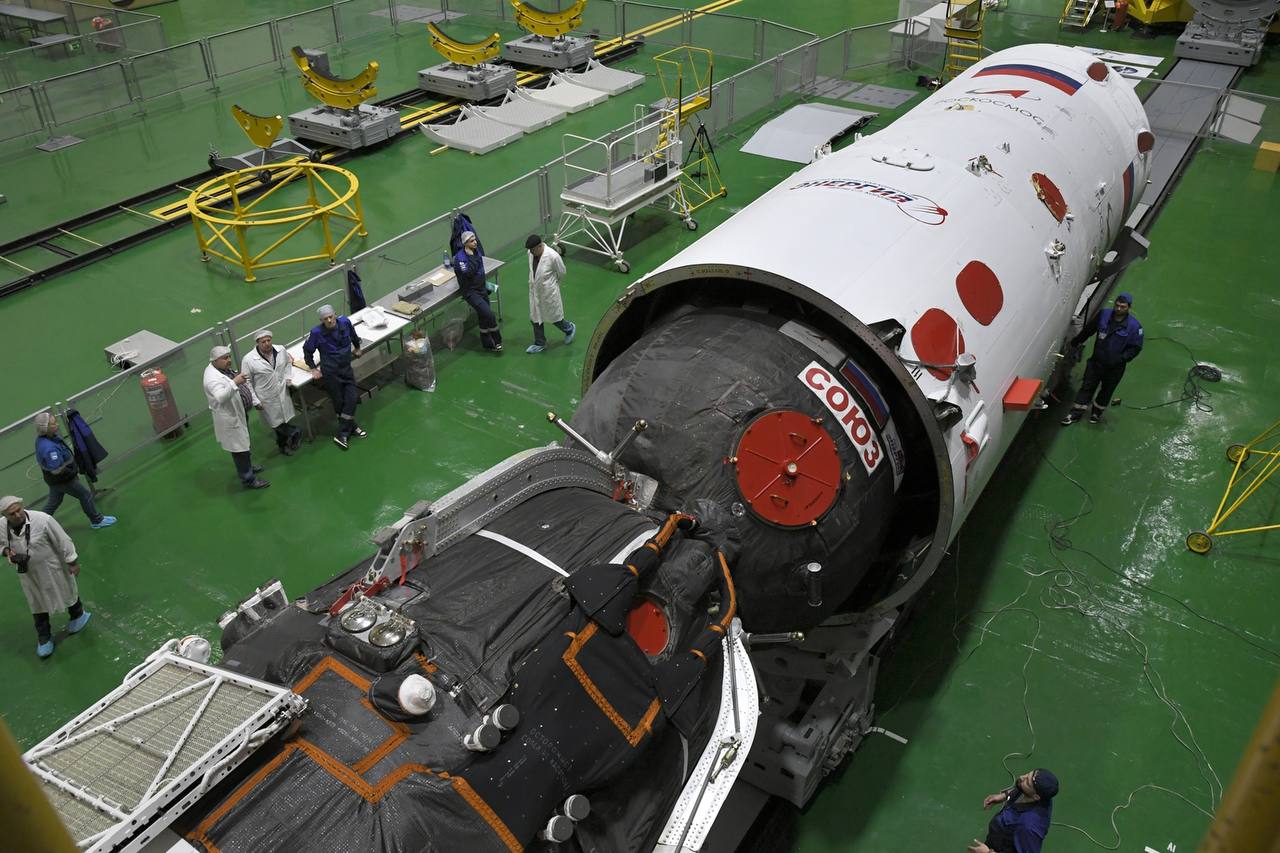
- 2024-03-13: visual inspection of the spacecraft, lowering it to a horizontal position, and rolling it inside the payload fairing.
- 2024-03-15: second and final familiarization training inside the flight-ready Soyuz MS-25 spacecraft.
- 2024-03-16: integration of the payload section to the main body of the Soyuz 2.1a rocket.
- 2024-03-18: rollout of the rocket to the launch pad.
- 2024-03-21: aborted launch due to a voltage drop in a chemical battery.
Soyuz MS-25’s Flight Profile
Approximate Timeline (Based On The Soyuz MS-18 Mission)
| Hrs:Min:Sec From Liftoff | Events |
| – 00:00:15 | Engine start sequence |
| 00:00:00 | Liftoff |
| + 00:01:53 | Escape tower jettison |
| + 00:01:58 | First stage separation |
| + 00:02:33 | Fairing jettison |
| + 00:04:48 | Second stage separation |
| + 00:04:55 | Tail section separation |
| + 00:08:46 | Third stage main engine cutoff |
| + 00:08:49 | Soyuz MS separation |
Crewed Flights To The ISS Prior To Soyuz MS-25
| Date (UTC) | Mission | Rocket | Pad |
|---|---|---|---|
| 2023-05-21 – 21:37 | Axiom-2 | Falcon 9 | Kennedy Space Center, LC-39A |
| 2023-08-26 – 07:27 | Crew-7 | Falcon 9 | Kennedy Space Center, LC-39A |
| 2023-09-15 – 15:44 | Soyuz MS-24 | Soyuz 2.1a | Baikonur Cosmodrome, Site 31/6 |
| 2024-01-18 – 21:49 | Axiom 3 | Falcon 9 | Kennedy Space Center, LC-39A |
| 2024-03-04 – 03:53 | Crew-8 | Falcon 9 | Kennedy Space Center, LC-39A |
What Is Soyuz 2.1a?
Roscosmos’s Soyuz is a multi-use medium-lift launch vehicle that was introduced in far 1966 and since then has been the workhorse of the Soviet/Russian space program. It is capable of launching civilian and military satellites, as well as cargo and crewed missions to the ISS. Over the decades, several variants of the Soyuz rocket have been developed. In fact, Soyuz 2.1a is one of its latest iterations that belongs to the Soyuz 2 rocket family.
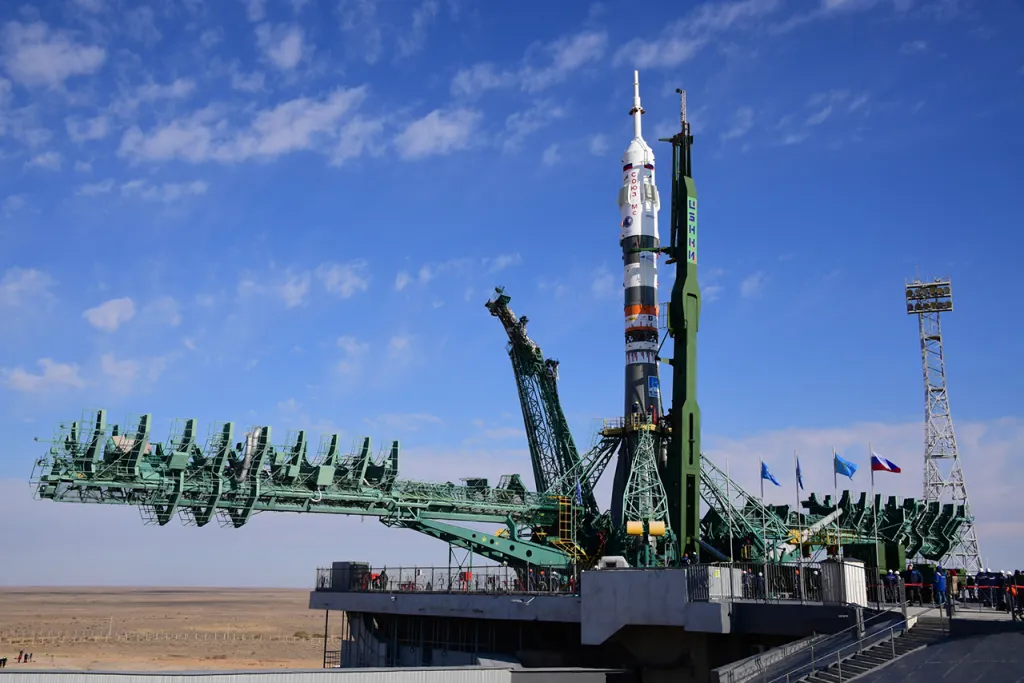
The rocket consists of three stages, with all of them being expendable. When launching to the ISS, Soyuz 2 flies carrying either a Progress capsule or a Soyuz spacecraft. One of the latter, Soyuz MS-25, presently rides on top of the rocket.
Soyuz 2.1a is about 46.3 m (152 ft) in height and 2.95 m (9 ft) in diameter. Further, its total liftoff mass is approximately 312,000 kg (688,000 lb). Additionally, the rocket’s payload lift capacity to LEO is between 6,600 kg (~14,600 lb) and 7,400 kg (~16,300 lb) depending on the launch site.
Stages
| Engines | Thrust*, Sea Level [kN (lbf)] | Thrust*, Vacuum [kN (lbf)] | ISP**, Sea Level [s] | ISP**, Vacuum [s] | |
| First Stage | 4x RD-107A | 840 (188,720) | 1,020 (229,290) | 263 | 320 |
| Second Stage | 1x RD-108A | 792 (178,140) | 922 (207,240) | 258 | 321 |
| Third Stage | 1x RD-0110 | – | 298 ( 67,000) | – | 326 |
**ISP: specific impulse
Side Boosters
The first stage of the Soyuz 2.1a rocket comprises four side boosters powered by RD-107A engines. Each one of the boosters has a conical shape and a dry mass of 3,784 kg (~8,300 lb). It is approximately 19.6 m (~64 ft) in length, with a diameter of 2.7 m (~9 ft). Each side booster has two vernier thrusters that serve for purposes of flight control.
The RD-107A engine runs on rocket-grade kerosene (RP-1) and liquid oxygen (LOx). The propellants are stored in the pressurized aluminum alloy tanks, with the kerosene tank located in the cylindrical part of the booster, and the LOx one, in the conical section. Each one of those engines has four combustion chambers and together they are capable of producing a thrust of 840 kN (~189,000 lbf) at sea level and 1,020 kN (~229,000 lbf) in a vacuum.
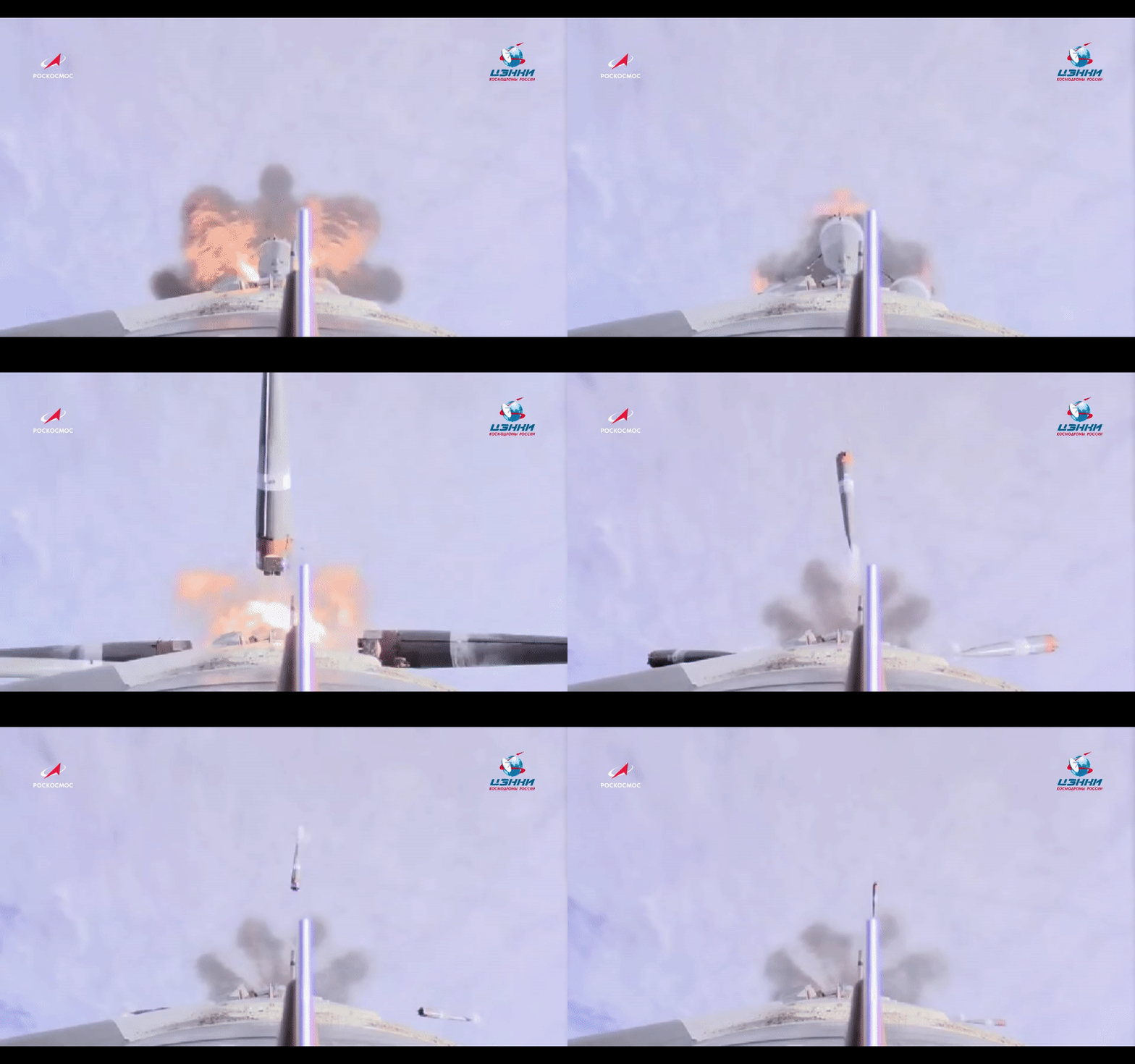
Perhaps, the most spectacular moment of the Soyuz 2 rocket’s launch is the separation of the first stage. It happens approximately two minutes after the launch. The boosters perform a pattern, known as the “Korolev cross” (named after Sergei Korolev, a very important figure of the USSR space program and history).
Second And Third Stages
The center core stage is powered by a single RD-108A engine, and the upper stage is fitted with a single RD-0110 engine. Both of these engines run on rocket-grade kerosene and LOx and have four combustion chambers. The second stage is 27.10 m (~89 ft) long, with a diameter of 2.95 m (~10 ft), and a dry mass of 6,545 kg (~14,400 lb). It has four vernier thrusters for three-axis flight control.
The third stage of a Soyuz 2 rocket has a height of 6.7 m (~22 ft), a diameter of 2.7 m (~9 ft), and a dry mass of 2,355 kg (~5,190 lb). One interesting thing about the engine on this stage is that it starts its ignition sequence prior to stage separation. This process is called “hot fire staging”.
Soyuz MS Spacecraft
The Soyuz MS spacecraft is the latest version of Russia’s long-standing three-person spacecraft. Soyuz capsules first flew in the 1960s. The spacecraft’s external appearance remains largely unchanged over this time. However, the internal systems and capabilities have been upgraded many times.

The Soyuz MS variant is one of the versions from the fourth generation of this spacecraft, with its first flight occurring in 2006. Soyuz consists of three sections:
- the orbital module
- the descent module
- the service module
The Orbital Module
This is the forward section of the spacecraft, the part that docks to the ISS. It is the part of the spacecraft where the crew will spend most of their time on orbit. It has more living room than the descent module. On the Progress uncrewed resupply missions, this is replaced by a cargo module.
The Descent Module
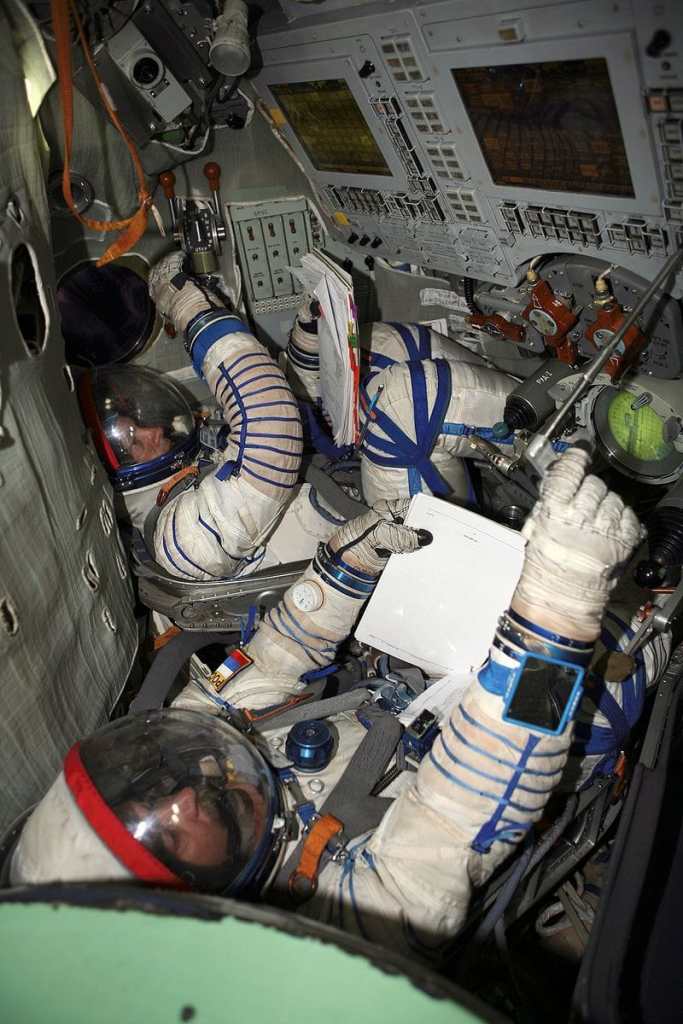
This is the middle section of the spacecraft. It is the only part that returns intact to land on Earth. This is where the crew will sit during the launch and the reentry. They will be wearing spacesuits in case of capsule depressurization. There is very little room for the crew of three in this module. On the Progress uncrewed resupply missions, this is replaced by a refueling module that can transfer fuel into the Russian segment. This can then be used by thrusters on the ISS to boost its orbit.
The Service Module
This is the aft (rear) section of the spacecraft. It provides the main engine used for maneuvering on orbit and the thrusters for fine control during docking and departure. Also, it also contains the life support system for environmental control of the rest of the spacecraft. In addition, it also supports the solar panels and various radio communication systems.
Kurs-NA Automatic Docking System
Like the Soyuz spacecraft, Progress MS is equipped with a Kurs-NA automatic docking system that was first tested on the Progress M-15M mission in July 2012. Compared to its ancestor, Kurs-A, the new system has only one AO-753A rendezvous antenna. Kurs-A had five (two 2AO-VKA and three AKR-VKA) of them. This antenna broadcasts radar pulses that are needed to determine the altitude and relative position of the spacecraft to the ISS. Moreover, Kurs-NA uses less power than Kurs-A.
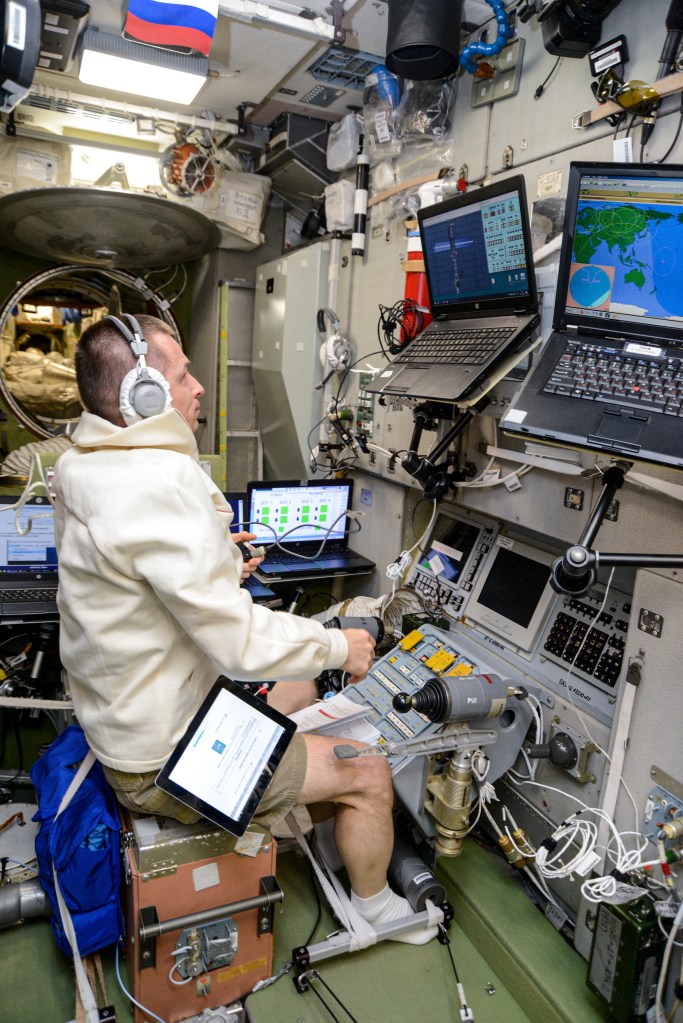
In addition, the Soyuz spacecraft can be docked to the ISS manually by the docking system called the Tele-Robotically Operated Rendezvous unit (TORU). This manual system serves as a backup to Kurs-NA in emergency situations and is located inside the Zvezda service module.


Very informative! Thank-you. All the best to the Everyday Astronaut team – especially Tim.
Thanks for you kind words!