


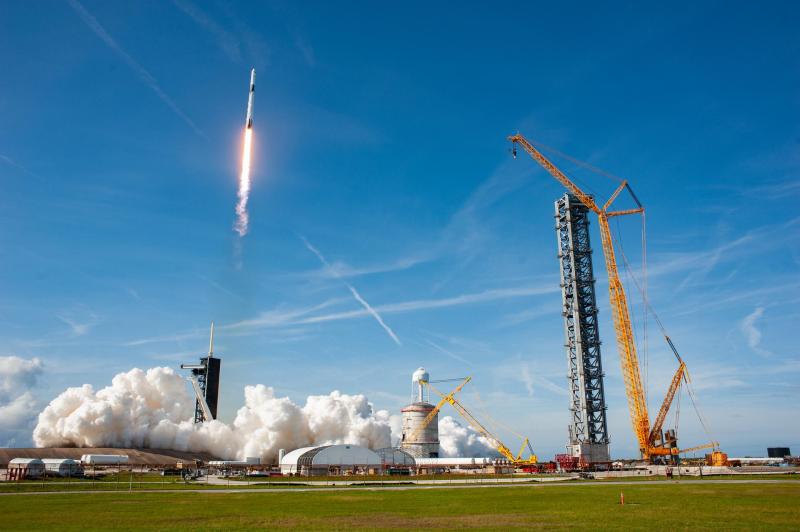

Featured Image: NASA
Lift Off Time | March 21, 2024 – 20:55 UTC | 16:55 EDT |
|---|---|
Mission Name | Dragon CRS-2 SpX-30, a Commercial Resupply Service mission to the International Space Station (ISS) |
Launch Provider | SpaceX |
Customer | National Aeronautics and Space Administration (NASA) |
Rocket | Falcon 9 Block 5 booster B1080-6; 62.96-day turnaround |
Launch Location | Space Launch Complex 40 (SLC-40), Cape Canaveral Space Force Station, Florida, USA |
Payload mass | Not Specified |
Where is the spacecraft going? | Dragon 2 C209-4 will rendezvous with the ISS, ~400 km low Earth orbit (LEO) at a 51.66° inclination |
Will they be attempting to recover the first stage? | Yes |
Where will the first stage land? | Landing Zone 1 |
Will they be attempting to recover the fairings? | There are no fairings on the Dragon 2 |
Are these fairings new? | There are no fairings on the Dragon 2 |
How’s the weather looking? | The weather is currently 90% GO for launch (as of March 20, 2024 – 12:30 UTC) |
This will be the: | – 313th Falcon 9 launch – 27th Falcon 9 mission of 2024 – 242nd Falcon 9 flight with a flight-proven booster – 256th re-flight of a booster – 25th re-flight of a booster in 2024 – 286th booster landing – 212th consecutive landing (a record) – 28th launch for SpaceX in 2024 – 327th SpaceX mission – 174th SpaceX launch from SLC-40 – 4th flight of Dragon 2 C209 – 55th orbital launch attempt of 2024 |
Where to watch | Official livestream Everyday Astronaut livestream; come join and ask questions! |
What Does All This Mean?
Dragon CRS-2 SpX-30 (CRS-30) is a Commercial Resupply Service mission that will be heading to the International Space Station (ISS) to deliver cargo. SpaceX was awarded this mission by NASA back in 2016 and will launch it on its Falcon 9 Block 5 rocket using a Cargo Dragon 2 – C209-4. The rocket will lift off from Space Launch Complex 40 (SLC-40), at the Cape Canaveral Space Force Station in Florida.
CRS-2 SpX-30 (CRS-30)
The International Space Station (ISS) is a large international collaboration between nations across the globe. Operating for over 20 years, the orbital laboratory needs regular visits from cargo vehicles to deliver new experiments, supplies like clothing, food, and water, and eventually acts as a garbage disposal for used items.
Currently, three different vehicles from three different entities have the capability to carry cargo to the ISS. Northrup Grumman’s Cygnus spacecraft launched by NASA, ROSCOSMOS’s Soyuz Progress spacecraft, and SpaceX’s Cargo Dragon spacecraft.
The last SpaceX resupply mission was in November of 2023, CRS-2 SpX-29, with SpaceX also flying CRS2 Cygnus NG-20 on January of 2024.
Sen’s 4K Camera System
Sen is deploying a 4K camera system, dubbed “SpaceTV-1,” to the ISS via NASA’s SpaceX CRS-30 mission. The cameras will be hosted on Airbus U.S. Space & Defense’s ArgUS plate on the Bartolomeo platform, which is affixed to the European Space Agency’s Columbus module.
This arrangement allows the cameras to capture footage of Earth’s horizon, surface, and the forward facing docking port. One camera will provide a panoramic view of the Earth’s horizon, while another will capture imagery of the Earth’s surface, with each pixel representing approximately 60 meters of the ground.
Sen also aims to demonstrate real-time Augmented Reality, allowing viewers to see mapping information on the nadir camera view. The livestream of Earth and the ISS will be freely accessible to everyone, with the goal of inspiring and empowering people to see Earth from space. Additionally, Sen also plans to use its video cameras for real-time environmental monitoring. The UK Space Agency expressed support for Sen’s mission, highlighting its potential for engaging diverse audiences and monitoring climate-related changes.
At least one camera will provide a continuous livestream in 4K resolution, which will be accessible through either their website or Sen’s app, downloadable from the Apple App store and soon from Google’s Play Store. Once aboard the ISS, Sen’s payload will be attached to the Bartolomeo platform robotically by Canadarm2, with the installation schedule determined by NASA. With one satellite already in orbit – ETV-A1 – Sen plans to launch additional satellites in 2025.
CRS-30 Research Payloads
Every resupply mission hosts dozens of experiments and technology demonstrations. On CRS-30, these range from tests of technologies to monitor sea ice, automate 3D mapping, and create nanoparticle solar cells. These research experiments can range from NASA-funded experiments to private companies and universities. Due to the amount of research on CRS-30, only select payloads will be discussed in-depth here. If you’d like to learn more, check out and explore NASA’s or the National Lab’s websites.
Killick-1
The “Killick-1” CubeSat, officially known as “Killick-1: A GNSS Reflectometry CubeSat for Measuring Sea Ice Thickness and Extent (Nanoracks-Killick-1),” employs Global Navigation Satellite System (GNSS) reflectometry to measure sea ice parameters. The ocean’s role in global climate and human activities underscores the importance of understanding it. GNSS reflectometry is a promising remote sensing technique that utilizes L-band signals, offering weather immunity and effectiveness in ocean remote sensing.
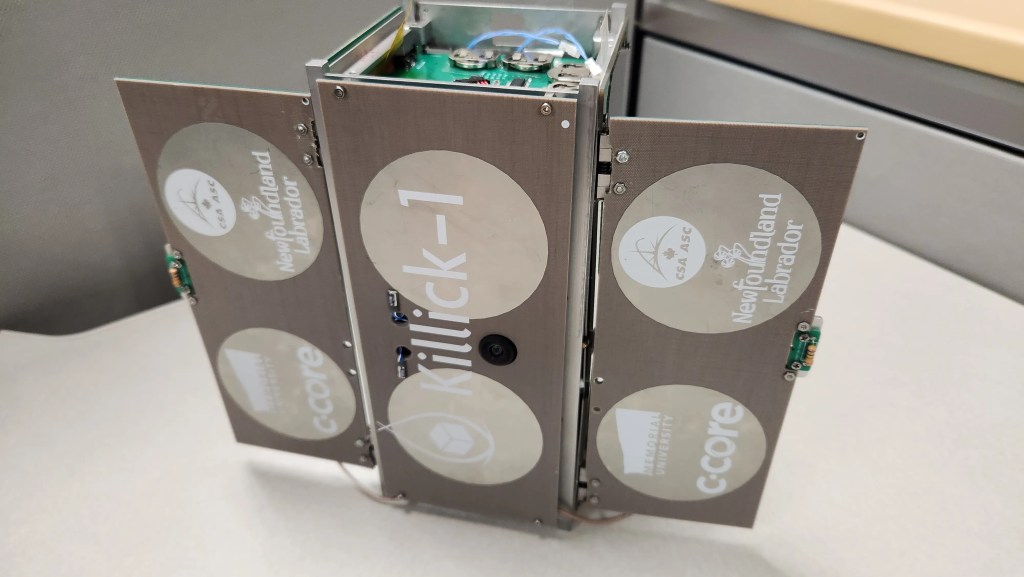
Killick-1 aims to measure sea ice parameters from space using this technology, building upon successful applications in sea surface oil spill sensing and sea ice detection. Unlike traditional large satellites, Killick-1 is a CubeSat developed by a team from Memorial University in collaboration with C-Core. Its objectives include training engineering students in Earth Observation, expanding research in GNSS-R-based remote sensing, and fostering expertise in small satellite development in Newfoundland and Labrador.
The project contributes to space systems and Earth observation capabilities in Newfoundland and Labrador, offering potential benefits for weather and climate models, as well as understanding ocean phenomena. Killick-1 collects data primarily over the North Atlantic Ocean, aiding in oceanographic research and ice cover analysis, which it will then transmit to a ground station in Canada for analysis.
Multi-resolution Scanner
The Multi-resolution Scanner (MRS) Payload for the Astrobee project aims to test sensors and robotics for automated 3D sensing, mapping, and situational awareness functions. It supports potential applications in future Gateway and Lunar missions, such as defect detection, maintenance, autonomous vehicle operations, and surface scanning using rovers.
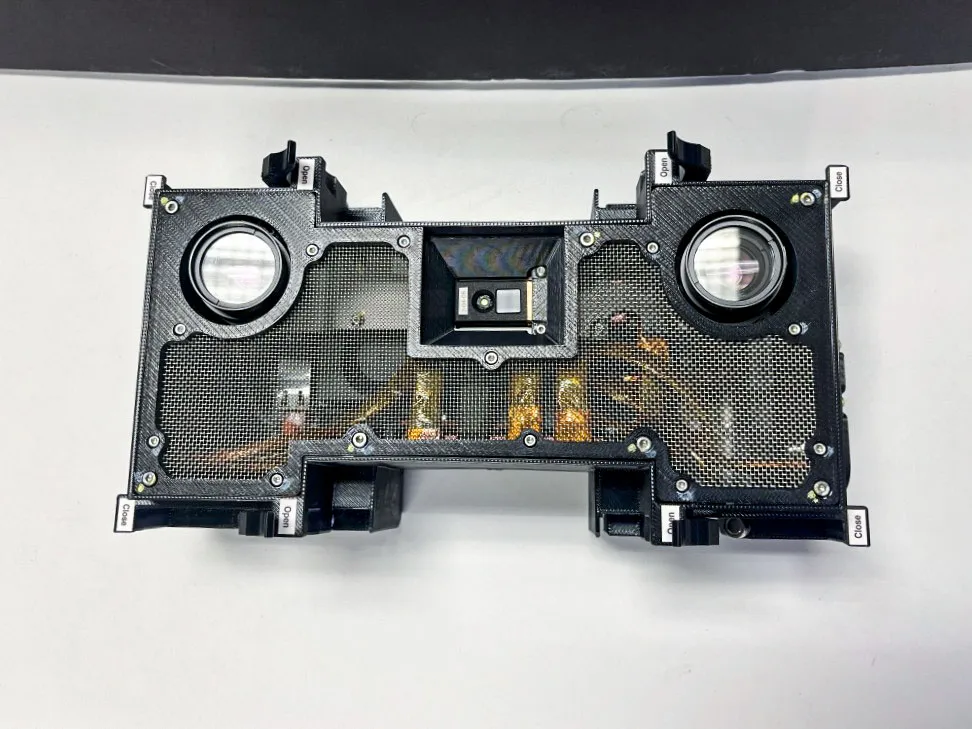
The project focuses on developing a modular sensor system for space-based autonomous scanning from various platforms, including the ISS’ interior, external hulls, and off-world surfaces. The hardware includes components like a stereo camera system, time-of-flight sensors, inertial measurement unit (IMU), and onboard computer housed in a 3D printed structure. Mission objectives include assessing operational performance of lightweight sensor payloads, demonstrating the value of sensor fusion technologies, and evaluating data processing needs for remote monitoring and maintenance applications. The technology has potential applications in both space and Earth environments, including off-world vehicular scanning, logistics, and training for future missions.
Nano Particle Haloing Suspension
The “Electrokinetic Assembly of Stable Nanoparticle Haloing Suspensions” (Nano Particle Haloing Suspension) project investigates microparticle and nanoparticle interactions under electric fields, particularly focusing on how particles assemble and crystallize. The project aims to enhance quantum-dot synthesized solar cells (QDSS) by precisely arranging particles.
The microgravity environment on the ISS allows for long-term observation without particle settling, which would eventually happen back on Earth. This investigation utilizes electric fields to self-assemble colloidal solutions containing both microparticles and nanoparticles, aiming to prove the presence of nanoparticles within microparticle assemblies. The project’s main goals include understanding fundamental mechanisms of electrokinetic self-assembly and applying findings to enhance QDSS technologies. Colloidal self-assembly methods could enhance various materials, including solar cells, on Earth and in Space.
APEX-09
The “C4 Photosynthesis in Space” (C4 Space) experiment, also known as Advanced Plant Experiment-09 (APEX-09), examines how microgravity affects the carbon dioxide capture mechanisms of two types of grasses, Brachypodium distachyon and Setaria viridis.
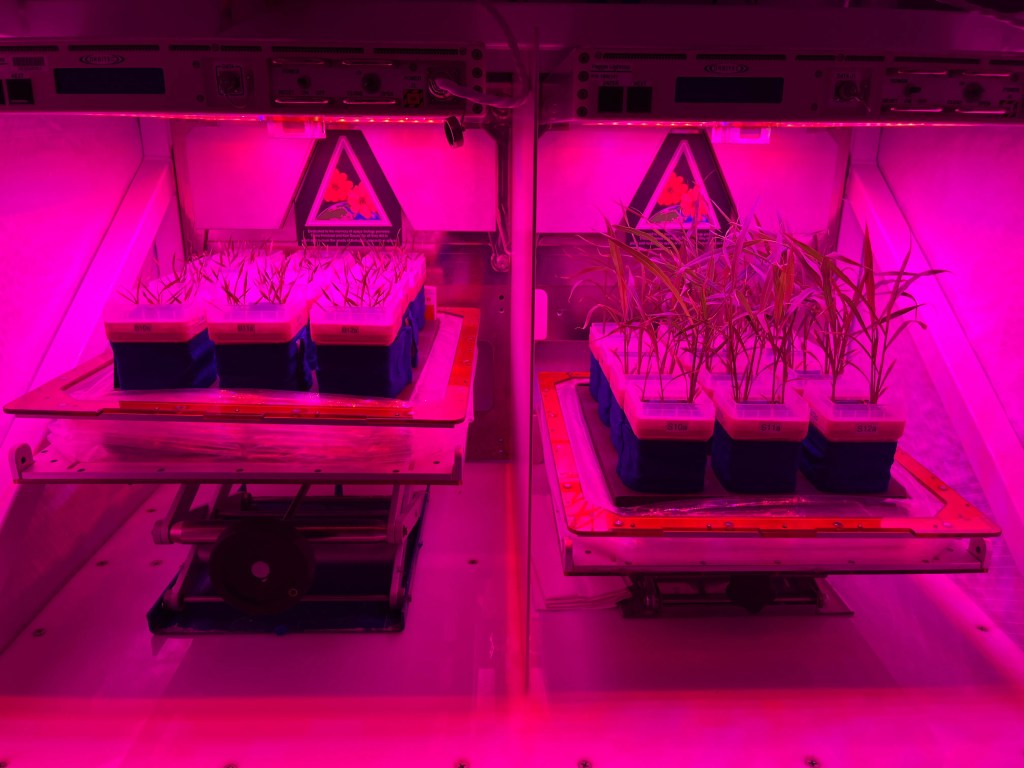
The study aims to understand how photosynthesis and overall plant metabolism change in space compared to Earth. Grasses with distinct CO2 concentrating mechanisms are grown aboard the International Space Station (ISS) for 32 days, with a control experiment conducted on Earth. Various data, including plant images, temperature, light intensity, and CO2 concentration, are recorded during the growth period, as well as plant tissue samples that are collected throughout the experiment for analysis back on Earth.
The investigation compares the impact of space conditions on C3 and C4 plant metabolism, providing insights into metabolic reprogramming in space environments. Additionally, the study supports NASA’s efforts to evaluate the potential of growing small-stature vegetable crops for future deep space exploration missions. Results could inform the use of carbon-fixing plants in bioregenerative life support systems for space exploration, as well as expand and improve the use of these plants back on Earth.
What Is Falcon 9 Block 5?
The Falcon 9 Block 5 is SpaceX’s partially reusable two-stage medium-lift launch vehicle. The vehicle consists of a reusable first stage, an expendable second stage, and, when in payload configuration, a pair of reusable fairing halves.
First Stage
The Falcon 9 first stage contains nine Merlin 1D+ sea-level engines. Each engine uses an open gas generator cycle and runs on RP-1 and liquid oxygen (LOx). Each engine produces 845 kN of thrust at sea level, with a specific impulse (ISP) of 285 seconds, and 934 kN in a vacuum with an ISP of 313 seconds. Due to the powerful nature of the engine, and the large amount of them, the Falcon 9 first stage is able to lose an engine right off the pad, or up to two later in flight, and be able to successfully place the payload into orbit.
The Merlin engines are ignited by triethylaluminum and triethylborane (TEA-TEB), which instantaneously burst into flames when mixed in the presence of oxygen. During static fire and launch the TEA-TEB is provided by the ground service equipment. However, as the Falcon 9 first stage is able to propulsively land, three of the Merlin engines (E1, E5, and E9) contain TEA-TEB canisters to relight for the boost back, reentry, and landing burns.
Second Stage
The Falcon 9 second stage is the only expendable part of the Falcon 9. It contains a singular MVacD engine that produces 992 kN of thrust and an ISP of 348 seconds. The second stage is capable of doing several burns, allowing the Falcon 9 to put payloads in several different orbits.
For missions with many burns and/or long coasts between burns, the second stage is able to be equipped with a mission extension package. When the second stage has this package it has a grey strip, which helps keep the RP-1 warm, an increased number of composite-overwrapped pressure vessels (COPVs) for pressurization control, and additional TEA-TEB.
Falcon 9 Booster
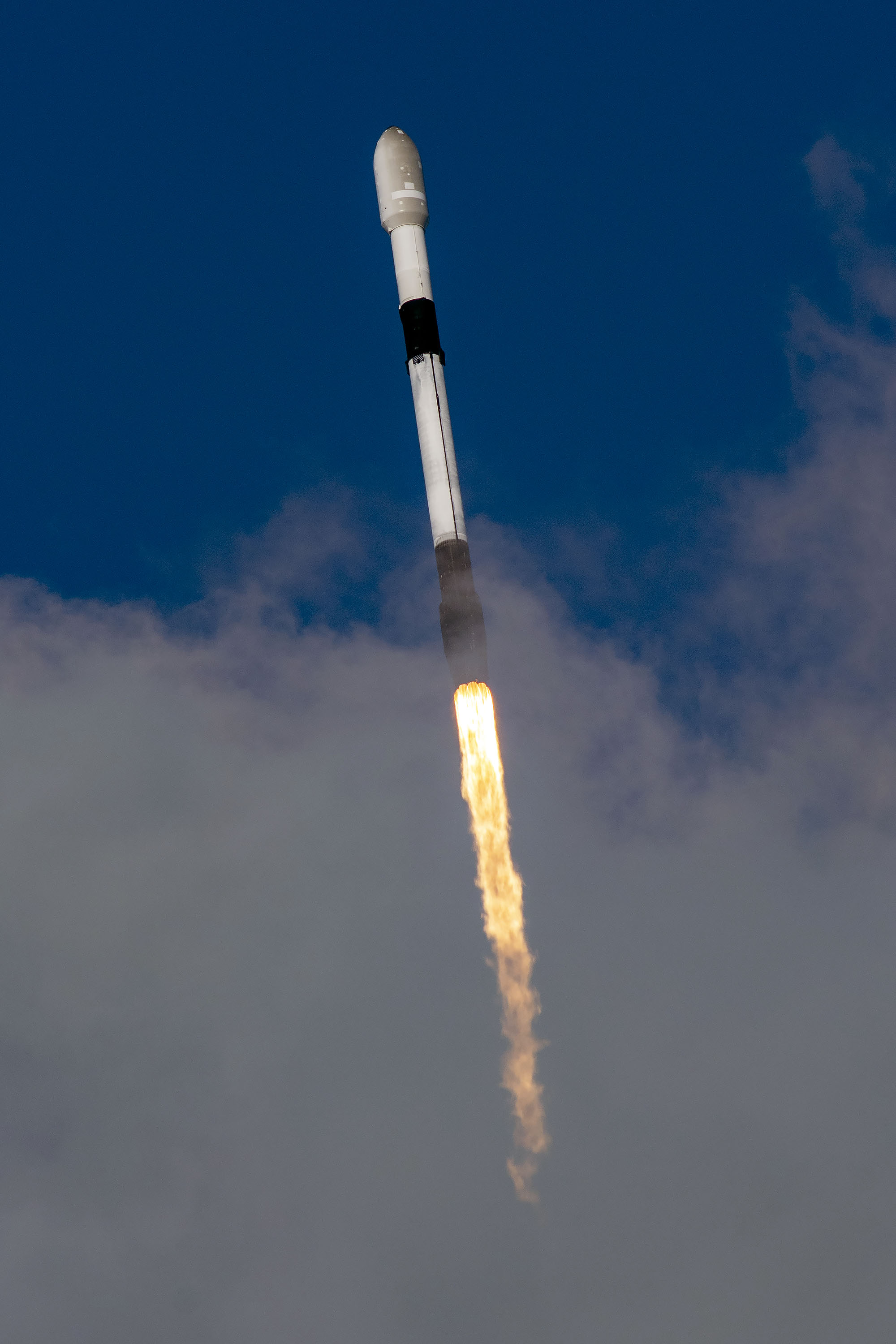
The booster supporting the CRS-30 mission is B1080-6; as the name implies, the booster has supported five previous missions. Following its landing, its designation will change to B1080-7.
| B1080’s missions | Launch Date (UTC) | Turnaround Time (Days) |
| Axiom-2 | May 21, 2023 – 21:37 | N/A |
| Euclid | July 1, 2023 – 15:12 | 40.73 |
| Starlink Group 6-11 | August 27, 2023 – 01:05 | 56.41 |
| Starlink Group 6-24 | October 22, 2023 – 02:17 | 56.05 |
| Axiom-3 | January 18, 2024 – 21:49 | 88.81 |
| Dragon CRS-2 SpX-30 | March 21, 2024 – 20:55 | 62.96 |
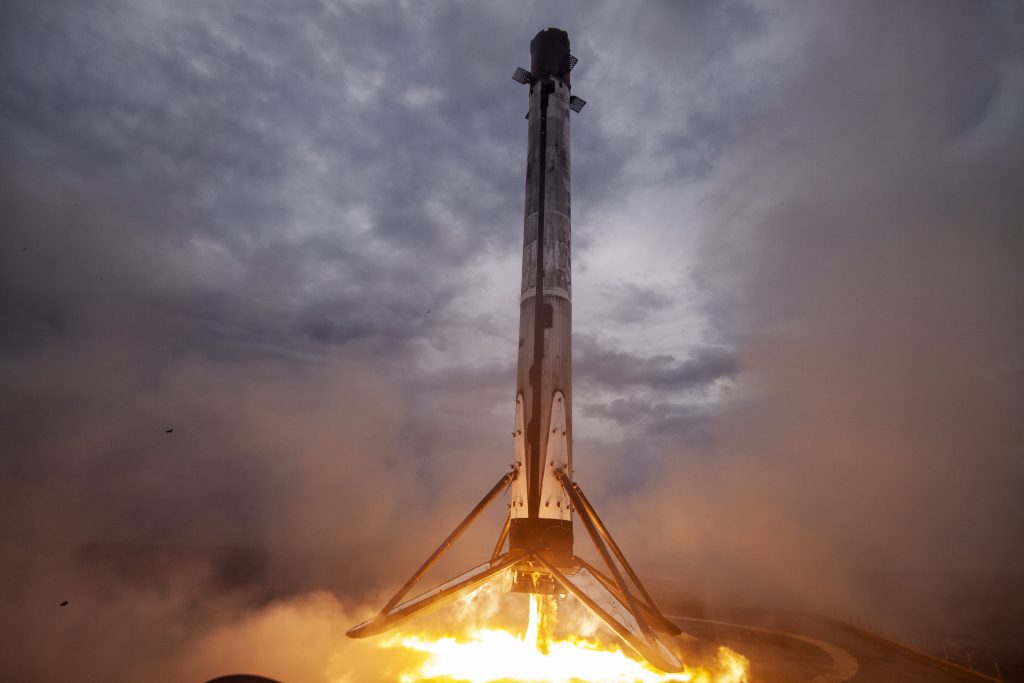
Following launch, the Falcon 9 booster will conduct up to three burns. These burns aim to softly touch down the booster on Landing Zone 1.
Cargo Dragon 2
The CRS-30 mission will be the tenth mission to the ISS for a Cargo Dragon 2 and the fourth mission for Dragon C209. Like its fellow Dragons it will return to Earth after serving its time on the ISS bringing back experiments and other cargo. It will then be refurbished and used on another mission in the future.
| C209’s missions | Launch Date (UTC) | Turnaround Time (Days) |
|---|---|---|
| Dragon CRS-2 SpX-22 | June 03, 2021 | N/A |
| Dragon CRS-2 SpX-24 | December 21, 2021 | 171 |
| Dragon CRS-2 SpX-27 | March 15, 2023 | 449 |
| Dragon CRS-2 SpX-30 | March 21, 2024 | 372 |
Cargo Dragon 2 is 8.1 m (26.6 ft in) in height and 3.7 meters (12 feet) in diameter. Compared to the original Cargo Dragon, the upgraded spacecraft can and will automatically dock on the ISS. The old version had to be manually berthed by Canadarm2.
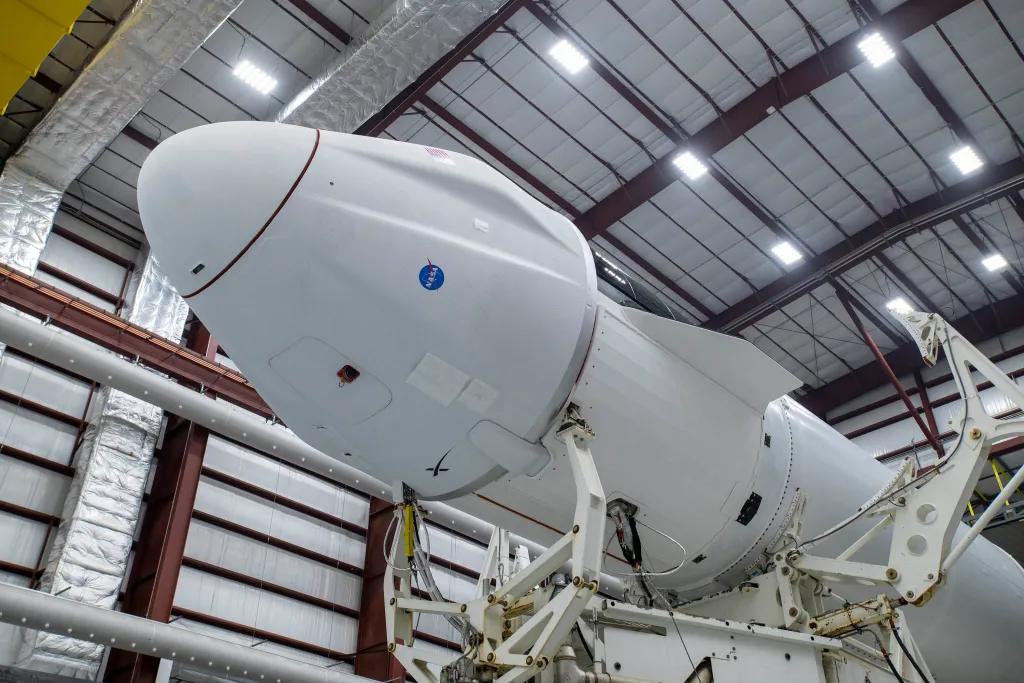
The Cargo Dragon 2 shares a similar design with the Crew Dragon spacecraft intended to carry astronauts to the ISS and back to Earth. However, there are some differences. The Cargo Dragon 2 does not have SuperDraco abort engines, nor a life support system since there will be no human passengers on board. In the pressurized section, the seats and crew displays have been swapped for cargo racks. The environmental control system has been also reduced both in size and complexity.
Overall, the CRS-30 mission’s success criteria will be successful deployment of the Cargo Dragon 2 to the dedicated orbit, its docking to the ISS, and recovery of the booster.
CRS-30 Countdown
All times are approximate
| HR/MIN/SEC | EVENT |
|---|---|
| 00:38:00 | SpaceX Launch Director verifies go for propellant load |
| 00:35:00 | RP-1 (rocket grade kerosene) loading begins |
| 00:35:00 | 1st stage LOX (liquid oxygen) loading begins |
| 00:16:00 | 2nd stage LOX loading begins |
| 00:07:00 | Falcon 9 begins pre-launch engine chill |
| 00:05:00 | Dragon transitions to internal power |
| 00:01:00 | Command flight computer to begin final prelaunch checks |
| 00:01:00 | Propellant tanks pressurize for flight |
| 00:00:45 | SpaceX Launch Director verifies go for launch |
| 00:00:03 | Engine controller commands engine ignition sequence to start |
| 00:00:00 | Falcon 9 liftoff |
LAUNCH, LANDING, AND DEPLOYMENT
All times are approximate
| HR/MIN/SEC | EVENT |
|---|---|
| 00:01:12 | Max Q (moment of peak mechanical stress on the rocket) |
| 00:02:27 | 1st stage main engine cutoff (MECO) |
| 00:02:30 | 1st and 2nd stages separate |
| 00:02:38 | 2nd stage engine starts |
| 00:02:42 | 1st stage boostback burn begins |
| 00:03:15 | 1st stage boostback burn complete |
| 00:05:45 | 1st stage entry burn begins |
| 00:05:59 | 2nd stage engine cutoff (SECO-1) |
| 00:07:06 | 1st stage landing burn begins |
| 00:07:33 | 1st stage landing |
| 00:08:37 | Dragon separates from 2nd stage |
| 00:11:49 | Dragon nosecone open sequence begins |


I think you should add 1st time a Dragon 2 has launched from SLC-40 with the new tower.