



Featured image credit: SpaceX
Liftoff Time | January 18, 2024 – 21:49 UTC | 14:49 EDT |
|---|---|
Mission Name | Axiom Space Mission 3, the third fully private mission to the International Space Station |
Launch Provider | SpaceX |
Customer | Axiom |
Rocket | Falcon 9 Block 5, B1080-5 |
Launch Location | Launch Complex 39A (LC-39A), Kennedy Space Center, Florida, USA |
Payload mass | Launch mass: ~13,000 kg (~28,600 lb) Landing mass: ~10,000 kg (~22,000 lb) |
Where is the spacecraft going? | Crew Dragon C212 Freedom will dock with the International Space Station (ISS) in a ~420 km circular orbit at 51.6º |
Will they be attempting to recover the first stage? | Yes |
Where will the first stage land? | Landing Zone 1, Cape Canaveral Space Force Station, Florida |
Will they be attempting to recover the fairings? | There are no fairings on the vehicle |
Are these fairings new? | N/A |
This will be the: | – 3rd private mission to the ISS – 292nd Falcon 9 launch – 6th Falcon 9 mission of 2024 – 6th launch for SpaceX in 2024 – 306th mission for SpaceX overall – 14th orbital launch attempt of 2024 |
Where to watch | Official livestream |
What’s This All Mean?
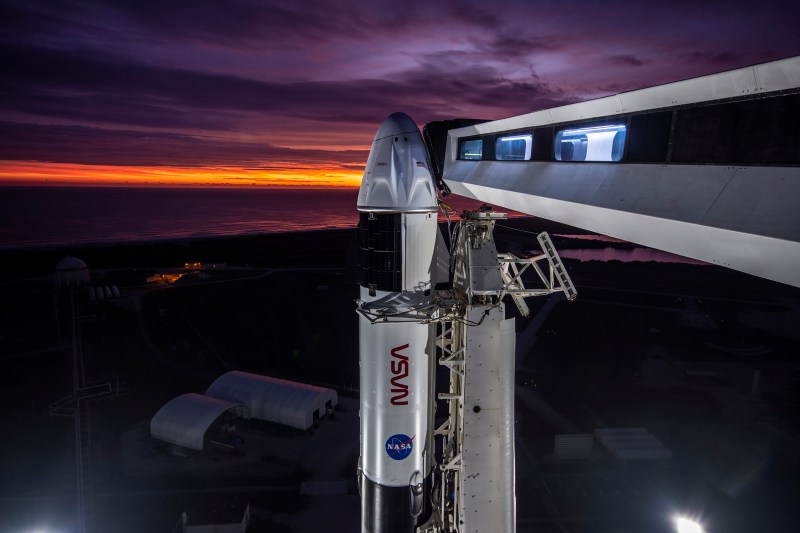
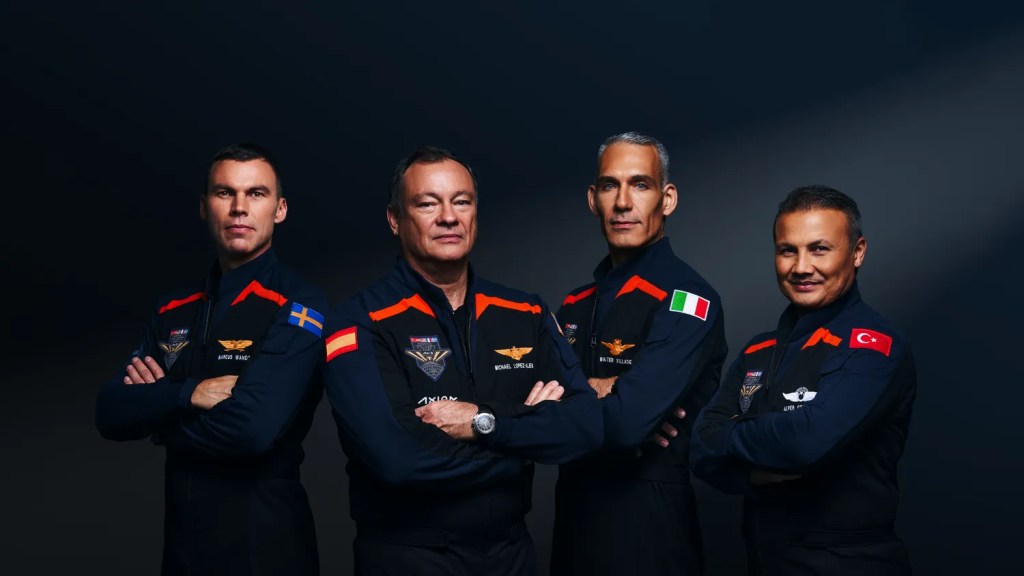
SpaceX will launch four astronauts to the International Space Station (ISS) aboard its Crew Dragon vehicle. With all four crew members being tourists, the Axiom Space Mission 3 (Ax-3) mission will mark the third fully private mission to the ISS, following the Axiom Space Missions 1 and 2. The crew will launch atop a Falcon 9 Block 5, from Launch Complex 39A, at the Cape Canaveral Space Force Station, in Florida.
How Did It Go?
This mission was fully successful, with the rocket lifting off on time and then docking to the Harmony module of the ISS January 20, at 10:42 UTC (5:42 AM EST). The crew is expected to return to Earth two weeks after launch.
Axiom Space Mission 3
With SpaceX as the launch/mission provider and Axiom as the customer, the four astronauts will launch in SpaceX’s Crew Dragon C212 Freedom spacecraft. The Ax-3 mission is a planned 14-day mission.
Axiom 3 is the first all European commercial astronaut mission to the ISS. Speaking of the importance of this, mission specialist Marcus Wandt said: “I’m so proud to be in the centre of that, and being a part of pioneering a new way for Europe to gain access to space and to increase the frequency … of not only European presence but also European science, and the benefit for what we can do here on Earth that brings everyone forward.”
Who Are The Astronauts?
Commander Michael López-Alegría
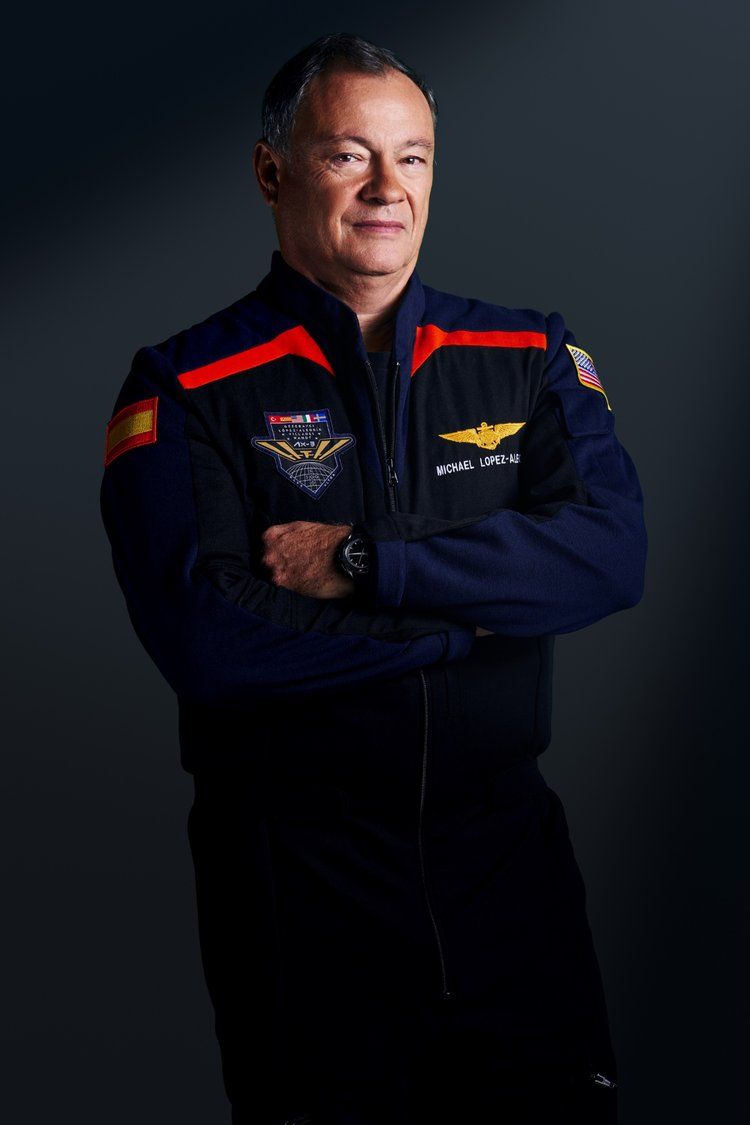
Michael López-Alegría is a Spanish-American astronaut and test pilot, who was born in Madrid, Spain and grew up in Mission Viejo, California. He joined the United States Navy, where he earned an undergraduate degree in Systems Engineering in 1980 from the United States Naval Academy, and a masters degree in Aeronautical Engineering in 1988 from the U.S. Naval Postgraduate School.
Ax-3 marks López-Alegría’s sixth launch to the International Space Station. His first space mission was STS-73 in 1995. He has flown on three Space Shuttle launches, a Soyuz launch, and most recently, he flew to the ISS as the mission commander for Ax-1.
He has so far performed ten spacewalks and currently holds NASAs record for cumulative time spent on extravehicular activities (EVAs).
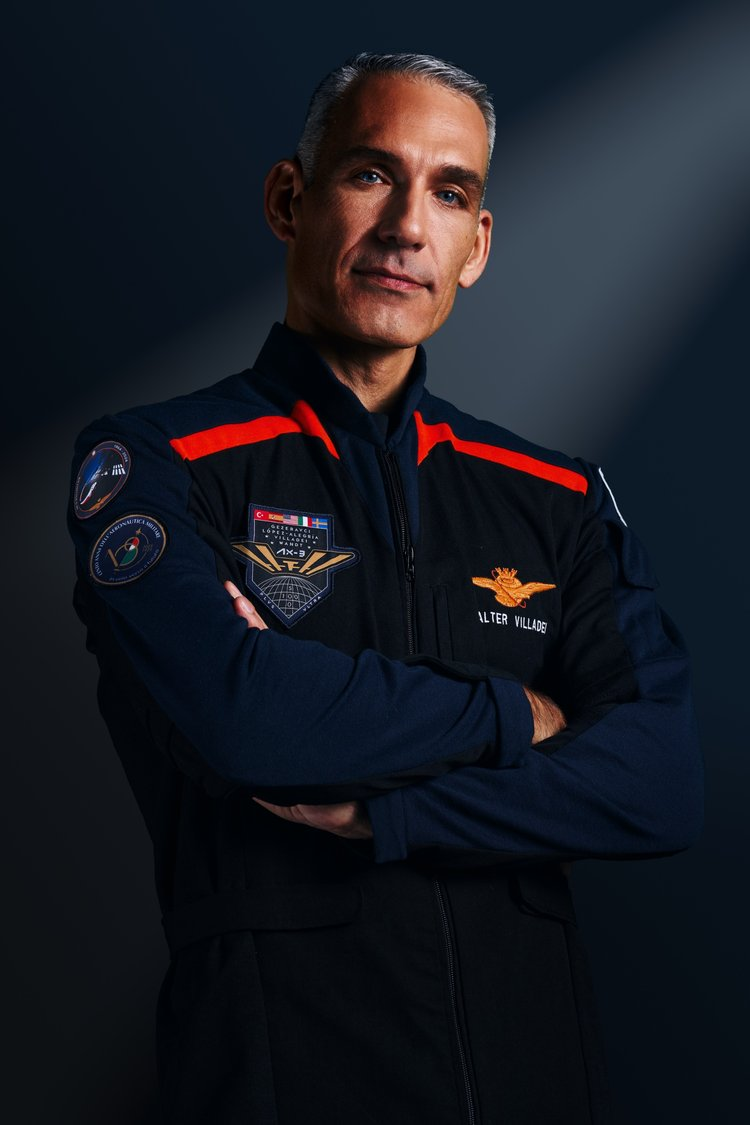
Pilot Walter Villadei
Born in Rome, Italy, Col. Walter Villadei currently serves as a colonel in the Italian Air Force (ItAF). Villadei also holds a master’s degree in aerospace engineering from the University of Naples Federico II and a specialization in astronautical engineering from the University of Rome.
In June 2023 Villadei flew on a sub-orbital flight, Galactic 01, with Virgin Galactic. He said this mission would prepare him for longer spaceflights in the future. This was a research mission for the Italian Air Force, with Villadei wearing a suit to measure biometric data and his physiological responses to spaceflight during the flight.
Mission Specialist Alper Gezeravci

Alper Gezeravcı is a Turkish pilot with 15 years of experience as a fighter pilot for the Turkish Air Force. He also holds degrees from the Air Force Academy in Istanbul and the Air Force Institute of Technology at Wright-Patterson Air Force Base in Ohio.
Ax-3 marks Gezeravcı’s first journey to space, but the mission is not only important to him, but also to Turkey, as this will make him Turkey’s first astronaut. Gezeravcı stated “I’m representing my beautiful country, Turkey, as the first person to go to space, however, this mission is not only focused on the first manned mission, but it’s also representing a lot of scientific missions that we are intending to contribute in the science world.”
Mission Specialist Marcus Wandt
Marcus Wandt has more than 20 years experience as a pilot. He served as a fighter pilot from 2003 to 2014 and is now a lieutenant colonel in the Swedish Air Force. He also has a masters degree in electrical engineering from Chalmers University of Technology.
This will be Wandt’s first spaceflight and he will be the second person from Sweden to fly to the ISS, after Christer Fugelsang. Wandt is member of ESA’s astronaut reserve, part of the 2022 ESA Astronaut Group. He will be the first of his group to undertake a mission.
Wandt said of the mission: “The decisiveness of how Sweden came together with ESA and Axiom, and all the support from NASA and SpaceX to make this happen is fantastic.”
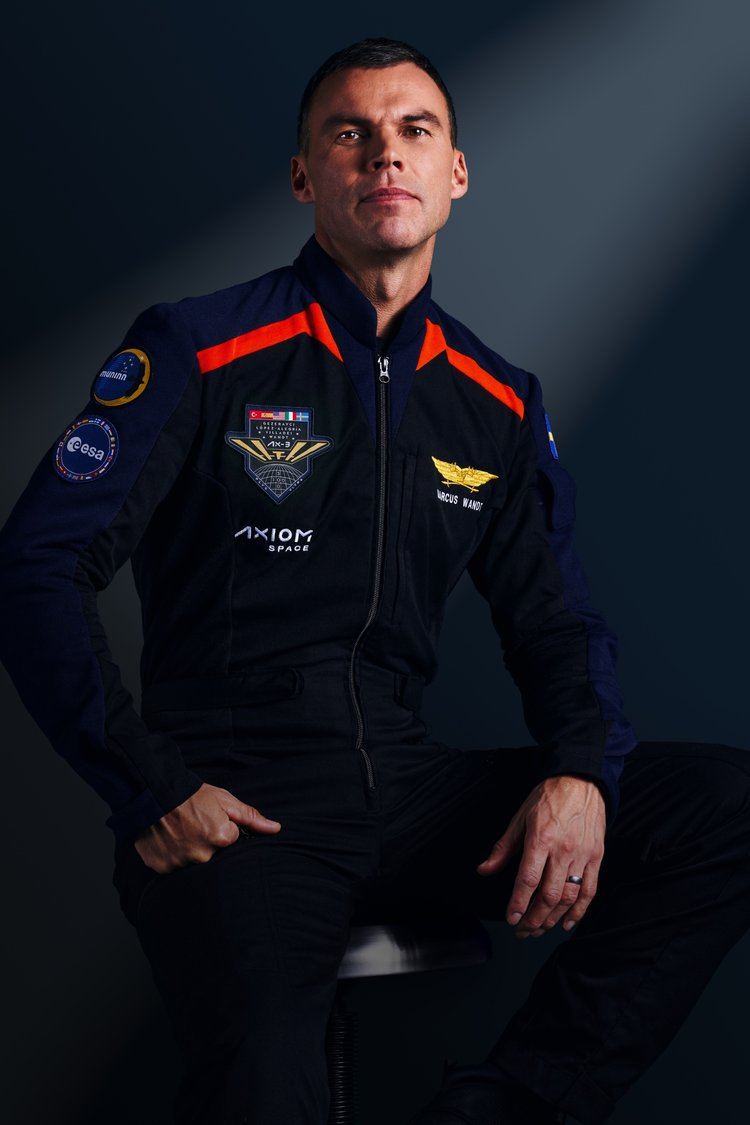
The backup commander for this mission is Peggy Whitson and the backup mission specialist is Tuva Cihangir Atasever.
Crew Dragon C212 Freedom
The Crew Dragon supporting the Axiom Space Mission 3 is the fourth operational Crew Dragon: C212. This Dragon has previously supported the USCV-4 mission; the spacecraft was named ahead of the Crew-4 launch by the crew. Kjell Lindgren said the name was chosen because it celebrates the fundamental human right, and alludes to the Freedom 7 capsule that was used by Alan Shepard on Mercury Redstone 3–the US’ first human spaceflight mission. Following the Crew-4 Mission, the spacecraft supported Axiom Mission 2.
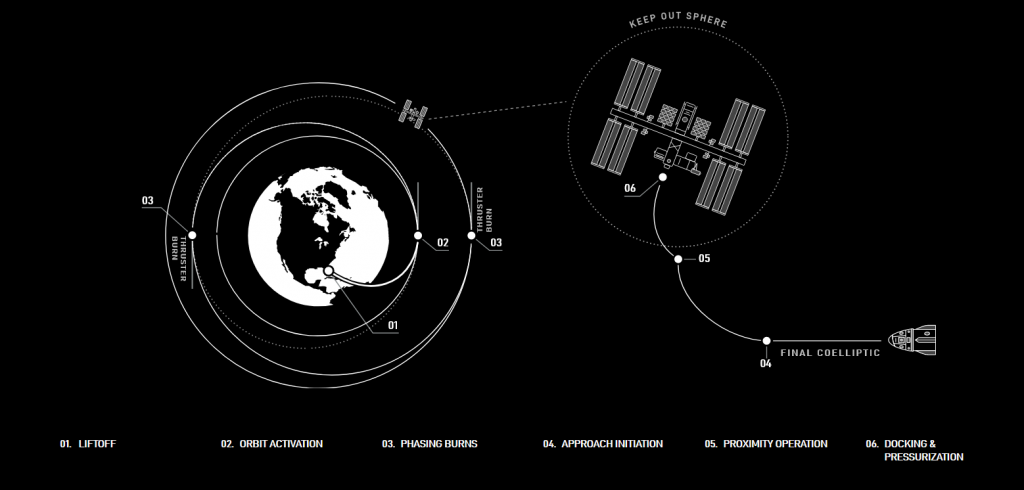
Axiom Space Mission 3 Mission Profile
Following separation from the second stage, Crew Dragon will begin opening its nosecone. This exposes the forward Draco thrusters and the docking mechanism. Freedom will then use its Draco thrusters to perform a number of phasing burns to increase its orbital altitude and align with the ISS.
Once the spacecraft is in the correct orbit and near the station, it will enter the ISS’ “keep out sphere.” Following a series of go/no-go polls, Dragon will dock itself to the ISS’ Zenith port on the Harmony module.
What Is Falcon 9 Block 5?
The Falcon 9 Block 5 is SpaceX’s partially reusable two-stage medium-lift launch vehicle. The vehicle consists of a reusable first stage, an expendable second stage, and, when in payload configuration, a pair of reusable fairing halves.
First Stage
The Falcon 9 first stage contains nine Merlin 1D+ sea-level engines. Each engine uses an open gas generator cycle and runs on RP-1 and liquid oxygen (LOx). Each engine produces 845 kN of thrust at sea level, with a specific impulse (ISP) of 285 seconds, and 934 kN in a vacuum with an ISP of 313 seconds. Due to the powerful nature of the engine, and the large number of them, the Falcon 9 first stage is able to lose an engine right off the pad, or up to two later in the flight, and be able to successfully place the payload into orbit.
The Merlin engines are ignited by triethylaluminum and triethylborane (TEA-TEB), which instantly burst into flames when mixed in the presence of oxygen. During static fire and launch the TEA-TEB is provided by the ground service equipment. However, as the Falcon 9 first stage is able to propulsively land, three of the Merlin engines (E1, E5, and E9) contain TEA-TEB canisters to relight for the boost back, reentry, and landing burns.
Second Stage
The Falcon 9 second stage is the only expendable part of the Falcon 9. It contains a singular MVacD engine that produces 992 kN of thrust and an ISP of 348 seconds. The second stage is capable of doing several burns, allowing the Falcon 9 to put payloads in several different orbits.
SpaceX is currently flying two different versions of the MVacD engine’s nozzle. The standard nozzle design is used on high-performance missions. The other nozzle is a significantly shorter version of the standard, decreasing both performance and material usage; with this nozzle, the MVacD engine produces 10% less thrust in space. This nozzle is only used on lower-performance missions, as it decreases the amount of material needed by 75%. This means that SpaceX can launch over three times as many missions with the same amount of Niobium as with the longer design.
For missions with many burns and/or long coasts between burns, the second stage is able to be equipped with a mission extension package. When the second stage has this package it has a grey strip, which helps keep the RP-1 warm, an increased number of composite-overwrapped pressure vessels (COPVs) for pressurization control, and additional TEA-TEB.
Falcon 9 Booster
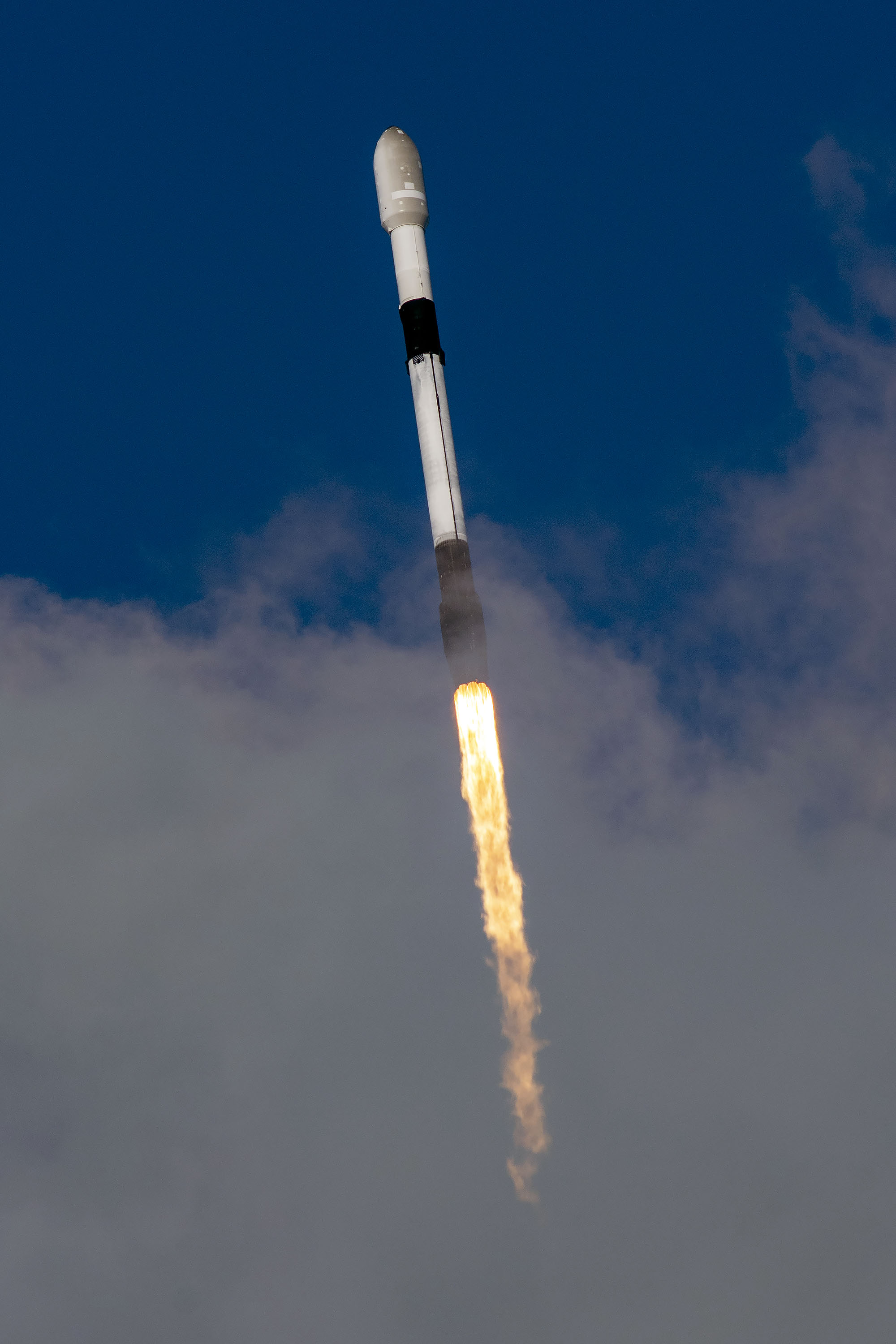
The booster supporting the Axiom Space mission 2 is B1080-5; as the name implies, the booster has supported four previous missions. Following its landing, its designation will change to B1080-6.
| B1080’s missions | Launch Date (UTC) | Turnaround Time (Days) |
| Axiom-2 | May 21, 2023 21:37 | N/A |
| Euclid | July 1, 2023 15:12 | 40.73 |
| Starlink Group 6-11 | August 27, 2023 01:05 | 56.41 |
| Starlink Group 6-24 | October 22, 2023 02:17 | 56.05 |
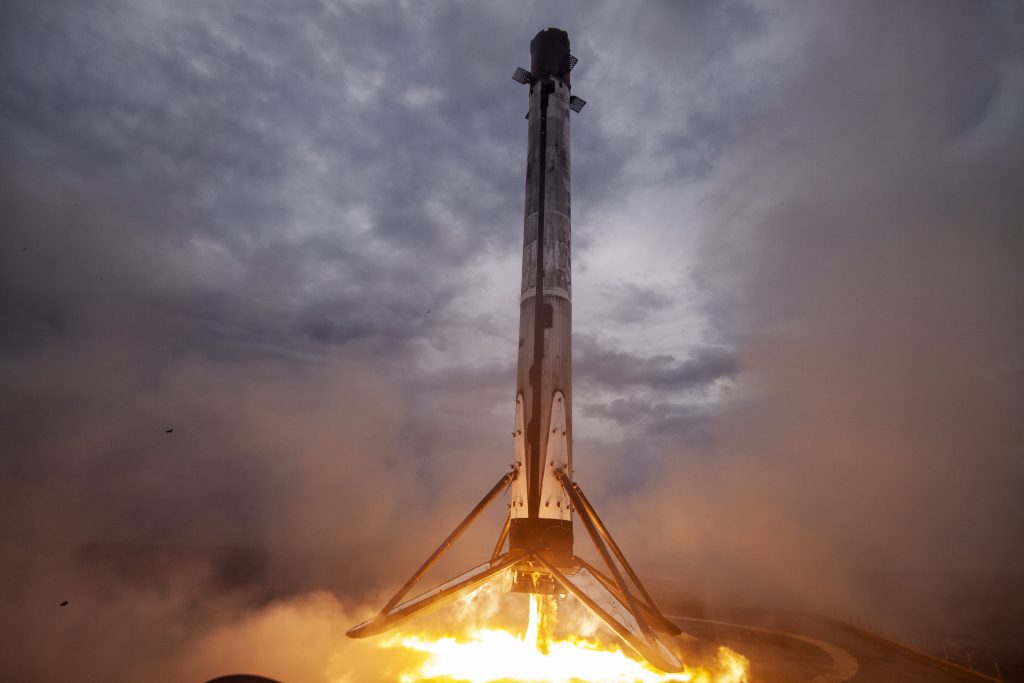
Following stage separation, Falcon 9 will conduct three burns. These burns aim to softly touch down the booster on SpaceX’s landing pad Landing Zone-1.
Ax-3 Countdown
All times are approximate
| HR/MIN/SEC | EVENT |
|---|---|
| 00:45:00 | SpaceX Launch Director verifies go for propellant load |
| 00:42:00 | Crew access arm retracts |
| 00:37:00 | Dragon’s launch escape system is armed |
| 00:35:00 | RP-1 (rocket grade kerosene) loading begins |
| 00:35:00 | 1st stage LOX (liquid oxygen) loading begins |
| 00:16:00 | 2nd stage LOX loading begins |
| 00:07:00 | Falcon 9 begins engine chill prior to launch |
| 00:05:00 | Dragon transitions to internal power |
| 00:01:00 | Command flight computer to begin final prelaunch checks |
| 00:01:00 | Propellant tank pressurization to flight pressure begins |
| 00:00:45 | SpaceX Launch Director verifies go for launch |
| 00:00:03 | Engine controller commands engine ignition sequence to start |
| 00:00:00 | Falcon 9 liftoff |
Ax-3 Launch, Landing, And Deployment
All Times Approximate
| HR/MIN/SEC | EVENT |
|---|---|
| 00:01:02 | Max Q (moment of peak mechanical stress on the rocket) |
| 00:02:26 | 1st stage main engine cutoff (MECO) |
| 00:02:29 | 1st and 2nd stages separate |
| 00:02:37 | 2nd stage engine starts |
| 00:02:39 | Boostback Burn Start |
| 00:03:28 | Boostback Burn End |
| 00:06:25 | 1st stage entry burn |
| 00:07:31 | 1st stage landing burn |
| 00:07:58 | 1st stage landing |
| 00:08:47 | 2nd stage engine cutoff (SECO-1) |
| 00:11:58 | Dragon separates from 2nd stage |
| 00:12:46 | Dragon nosecone open sequence begins |


Bummed about the scrub, oh well. Excited for tomorrow!
Acctchhuuuallyy Jessica Meir is usually counted as the second Swede since she has dual citizenships. Her mother is Swedish. 😉
I cant see a working link to get to the official livestream to watch the AX-3 launch, anyone else having this problem too??