


Featured image credit: ROSCOSMOS
Liftoff Time | December 21, 2023 – 08:48:39 UTC | 11:48:39 MSK |
|---|---|
Mission Name | Kosmos 2573? |
Launch Provider | Vozdushno-Kosmicheskiye Sily Rossiyskoy Federatsii (VKS RF), or the Air and Space Forces of the Russian Federation |
Customer | The Russian Defense Ministry |
Rocket | Soyuz 2.1b |
Launch Location | Site 43/4 at the Plesetsk Cosmodrome, in the Russian Federation |
Payload mass | TBD |
Where did the payload go? | TBD, but at least initially a low-Earth orbit at 338×499 km (~210×310 mi) in altitude, and 97.57 degrees in inclination |
Did they attempt to recover the first stage? | This is not a capability of the Soyuz 2.1b |
Where did the first stage land? | The side boosters crashed into the White Sea, and the first stage, into the Barents Sea, northwest of the launch site |
Did they attempt to recover the fairings? | This is not a capability of the Soyuz 2.1b |
Were these fairings new? | Yes |
This will be the: | – 87th launch of a Soyuz 2.1b – 7th launch of a Soyuz 2.1b of 2023 – 209th orbital launch attempt of 2023 |
Where to watch | In the unlikely event an official replay becomes available, we will list it here |
What’s All This Mean?
A Soyuz 2 rocket, either a 2.1a or a 2.1b, as both could be possible according to flight restrictions (NOTAMs), prepares to launch from an unknown pad at the Plesetsk Cosmodrome. The vehicle will fly following a northwest-bound trajectory, indicating a slightly retrograde orbit. Analysts suggest this could be either the Bars-M #5 satellite, a trio of reconnaissance satellites, or even Razdan (#2?). Launch opportunities exist from December 21 through 25.
At the time of publishing, Russian authorities have not disclosed almost any information. Hence, we will update when it becomes available, but presumably this payload’s identification could be Kosmos 2573.
How Did It Go?
Russian authorities have reported the identity of the launcher to be a Soyuz 2.1b, while its payload remains uncertain. Regarding the frequently used designation for military satellites, this could be Kosmos 2573, though 2574 has been also rumored.
What Is The Soyuz 2.1b?
Soyuz is a multi-use medium-lift launch vehicle that was introduced in 1966 and since then has been the workhorse of the Soviet/Russian space program. It is capable to launch civilian and military satellites, as well as cargo and crewed missions to the ISS. Over the decades, several variants of the Soyuz rocket have been developed. Soyuz 2.1b is one of its latest iterations that belongs to the Soyuz-2 rocket family.
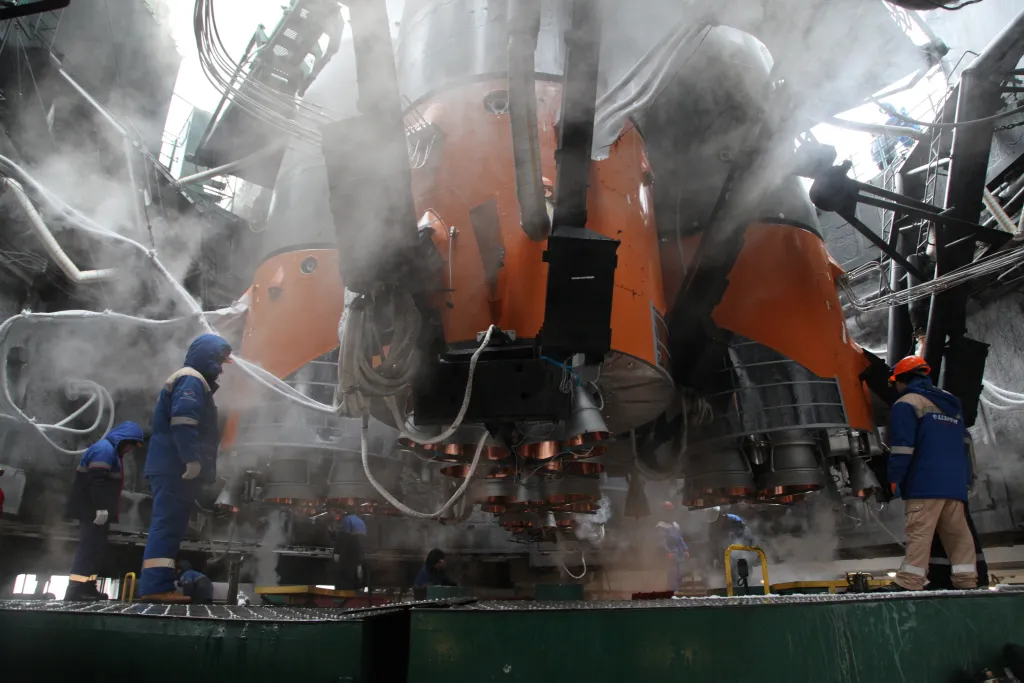
The rocket consists of three stages, all of them expendable. When launching to the ISS, Soyuz-2 can be flown with either a Progress capsule or a Soyuz spacecraft.
Soyuz 2.1b is about 46.3 meters (152 ft) in height and 2.95 meters (9 feet) in diameter. The vehicle’s total lift-off mass is approximately 312,000 kg (688,000 lb). The rocket’s payload lift capacity to low-Earth orbit (LEO) is between 6,600 and 7,400 kg depending on the launch site.
Stages
| First Stage | Second Stage | Third Stage | |
| Engine | 4 RD-107A | RD-108A | RD-0124 |
| Total Thrust | 840 kN (188,720 lbf), sea level 1,020 kN (229,290 lbf), vacuum | 792 kN (178,140 lbf), sea level 922 kN (207,240 lbf), vacuum | 294 kN (66,094 lbf), vacuum |
| Specific Impulse (ISP) | 263 s, sea level 320 s, vacuum | 258 s, sea level 321 s, vacuum | 359 s, vacuum |
Side Boosters
The first stage of the Soyuz 2.1b rocket is composed of 4 side boosters that are powered by RD-107A engines. Each one of the boosters has a conical shape and a dry weight of 3,784 kg. It is approximately 19.6 meters in length, with a diameter of 2.7 meters. Each side booster has two vernier thrusters that are used for flight control.
The RD-107A engine runs on rocket-grade kerosene (RP-1) and liquid oxygen (LOx). The propellants are stored in the pressurized aluminum alloy tanks, the kerosene tank is located in the cylindrical part of the booster, and the LOx one is in the conical section. Each one of those engines have 4 combustion chambers and together they are capable of producing a thrust of 840 kN at sea level and 1,020 kN in a vacuum.
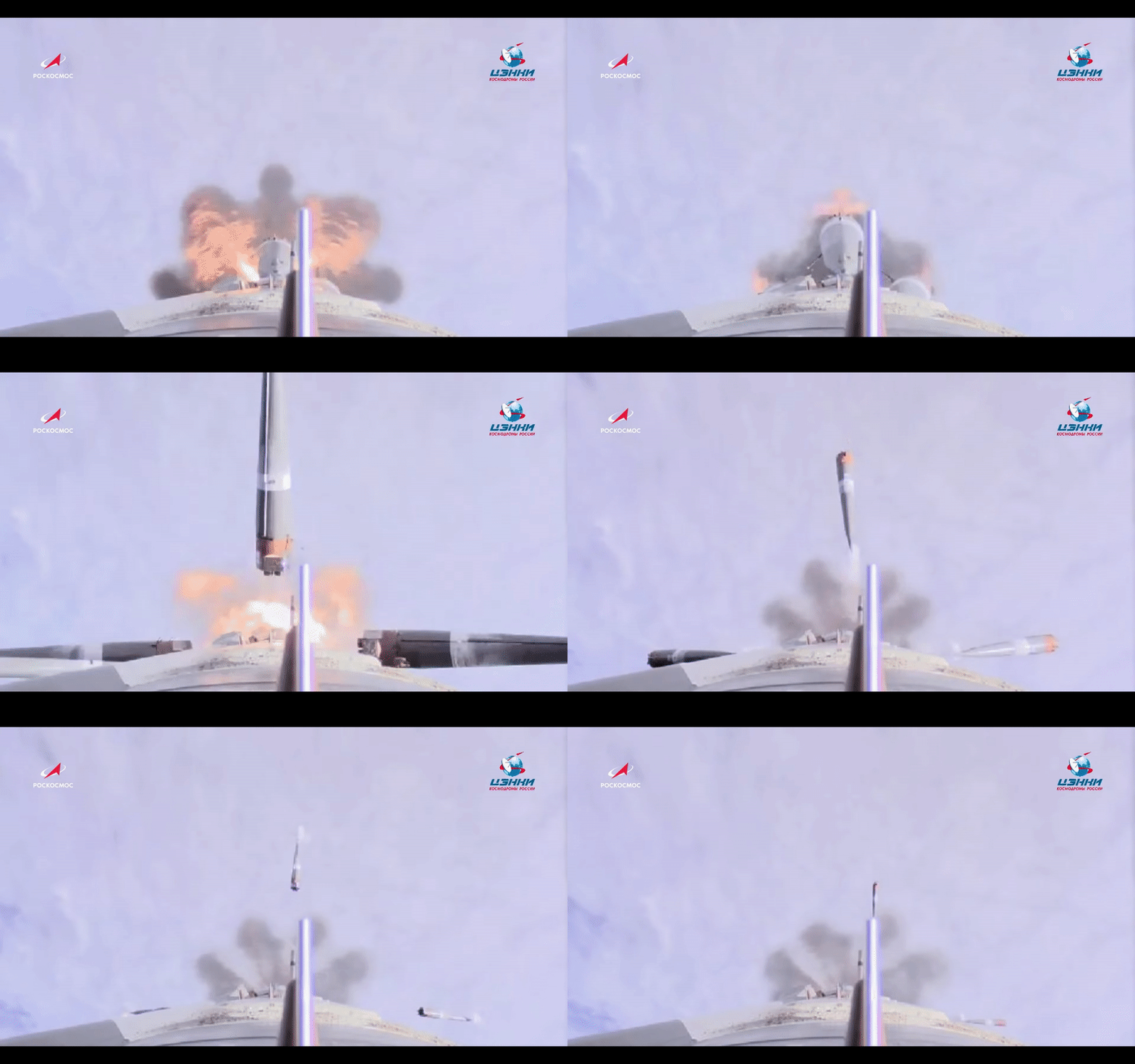
Perhaps, the most spectacular moment of the Soyuz-2 rocket’s launch is the separation of the first stage. It happens approximately 2 minutes after the launch. The boosters perform a pattern, known as the “Korolev cross” (named after Sergei Korolev, a very important figure of the USSR space program and history).
Second And Third Stages
The center core stage is powered by a single RD-108A engine, and the upper stage is fitted with a single RD-0124 engine. Both of these engines run on RP-1 and LOx and have 4 combustion chambers. The second stage is 27.1 meters long, with a diameter of 2.95 meters, and a dry mass of 6,545 kg. It has 4 vernier thrusters for three-axis flight control.
The third stage of a Soyuz-2 rocket has a height of 6.7 meters, a diameter of 2.7 meters, and a dry mass of 2,355 kg. One interesting thing about the RD-0124 engine on this stage is that it starts its ignition sequence prior to stage separation. This process is called “hot fire staging”.
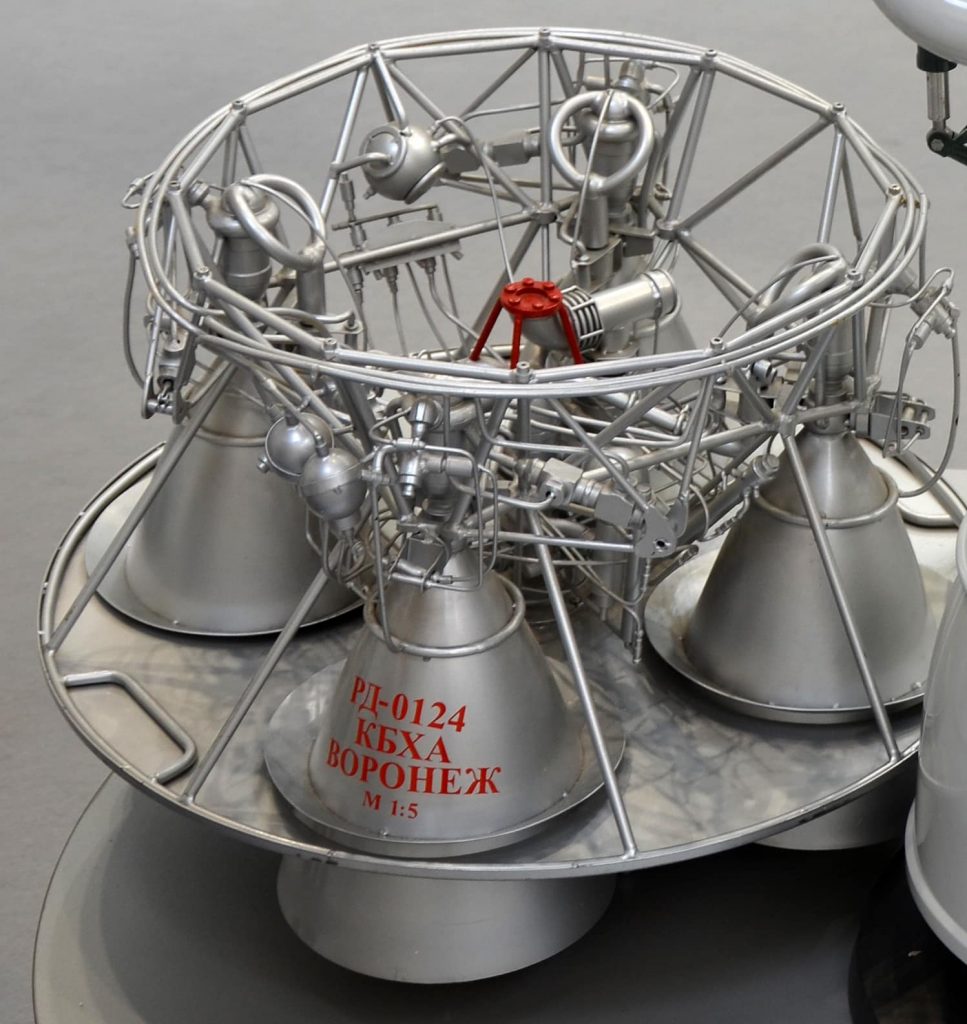
Upper stages: no upper stage was present during the Kosmos 2573 launch.

