


Featured image credit: Rocket Lab
Launch Time | January 31, 2024 – 06:34 UTC | 19:34 NZDT |
|---|---|
Mission Name | Four Of A Kind |
Launch Provider | Rocket Lab |
Customer | Spire Global Inc. for NorthStar |
Rocket | Electron |
Launch Location | Launch Complex-1B, Māhia Peninsula, New Zealand |
Payload mass | ~24kg (~53 Ib) |
Where did the satellites go? | 530 km low-Earth orbit (LEO) at 97° inclination |
Did they attempt to recover the first stage? | Yes |
Where did the first stage land? | It softly splashed down into the Pacific Ocean for a marine recovery |
Did they attempt to recover the fairings? | No |
Were these fairings new? | Yes |
This was the: | – 1st Rocket Lab launch of 2024 – 1st Electron launch of 2024 – 10th launch from Launch Complex-1B, Māhia Peninsula, New Zealand – 43rd Electron launch – 9th recovery attempt of an Electron – 22nd orbital launch attempt of 2024 |
Where to re-watch | Official livestream Tim Dodd, the Everyday Astronaut, will be streaming at T-30 minutes; come ask questions and join the conversation live! |
What Does All This Mean?
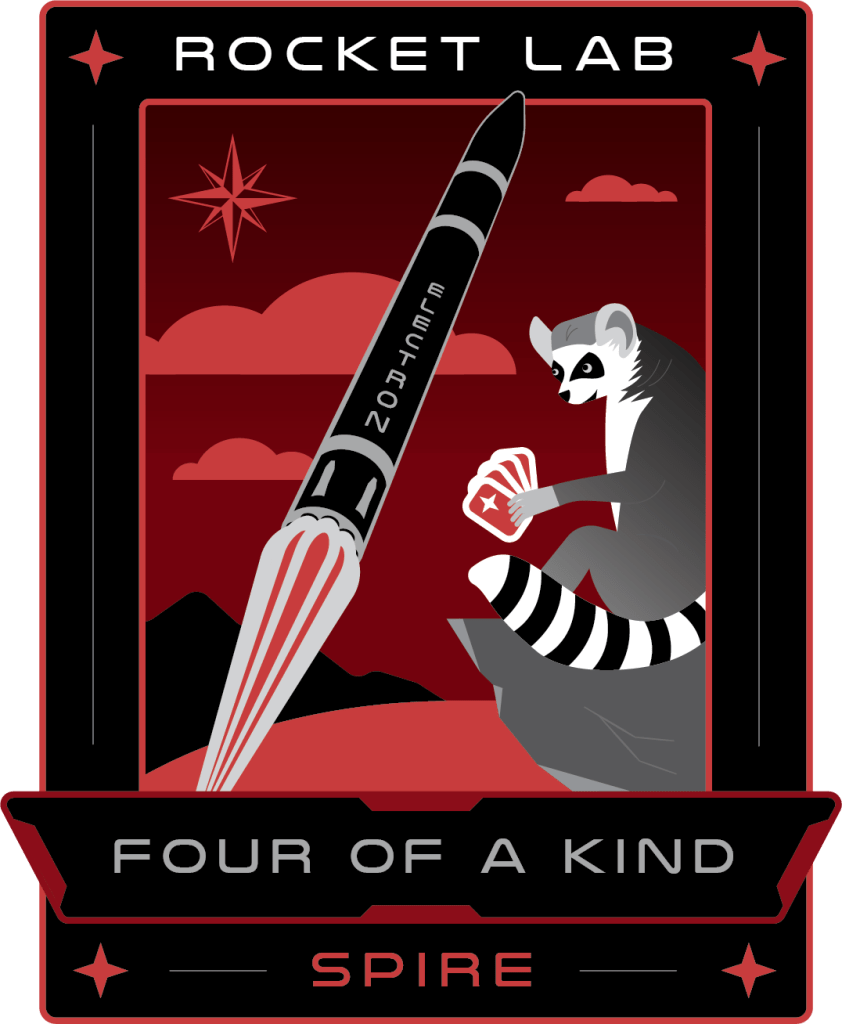
Four Of A Kind is Rocket Lab’s 43rd launch overall and its first launch this year, as well as its 10th launch from Launch Complex 1B. Their Electron rocket launched four Space Situation Awareness (SSA) satellites for Spire Global Inc’s customer NorthStar. The four L.E.M.U.R. satellites were launched into a circular 530 km Sun synchronous orbit at 97° inclination.
After the successful return to flight mission The Moon God Awakens, Rocket Lab launched its first rocket of the year 2024 on its Four Of A Kind mission. Recently, Rocket Lab’s We Will Never Desert You mission failed to reach orbit on September 19, 2023. Shortly after stage separation, Electron’s second stage experienced an anomaly and the mission failed at T+02:31. More information in We Will Never Desert You‘s article or in Rocket Lab’s press release on the conclusion of their investigation.
How Did It Go
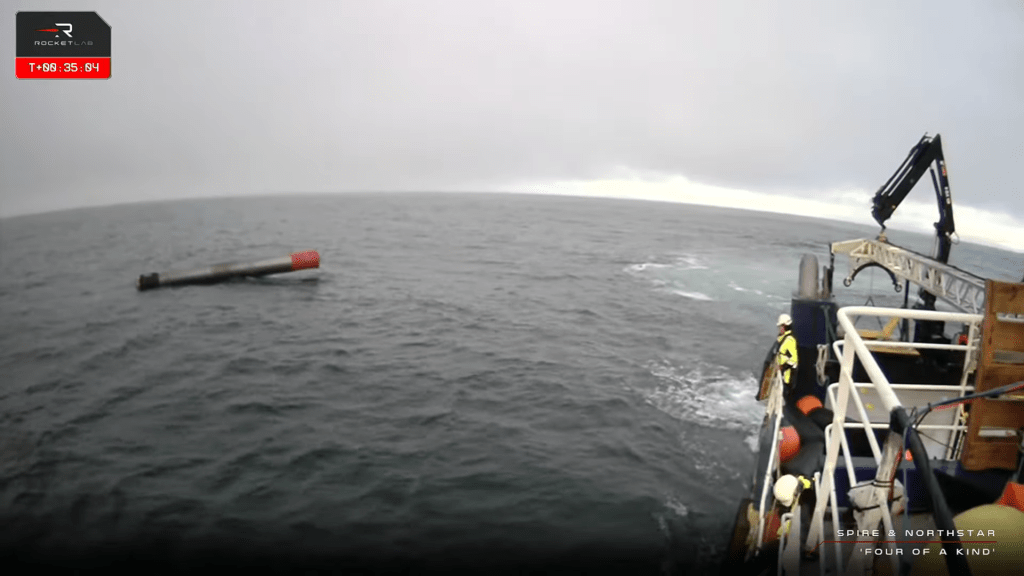
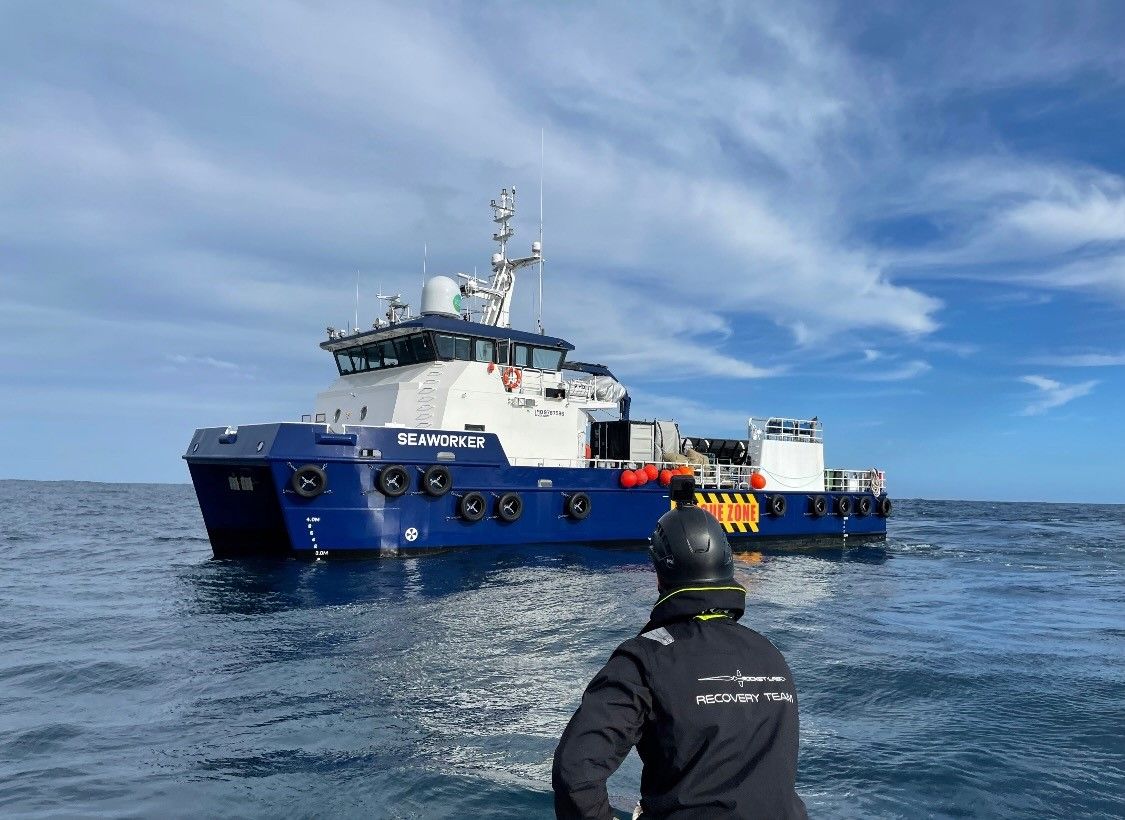
Rocket Lab successfully launched Four Of A Kind on January 31, 2024 – 06:34 UTC. Electron lifted off under the power of its nine Rutherford engines, passed MaxQ and shut all nine engines down at about T+2:25 propelling Electron’s second stage to an altitude of about 68 km. The two stages separated, the second stage Rutherford engine ignited, and Electron reached its initial orbit at T+9:16, where the third and final stage separated from stage two. While Electron’s second stage propelled its payloads to orbit, Electron’s first stage successfully re-entered Earth’s atmosphere after reaching its apogee at 134 km. The first stage successfully deployed its drogue chute at around T+7:27, its main chute at around T+8:08, and softly splashed down at around T+17:00, where it was later recovered by Rocket Lab’s recovery vessel.
Electron’s Kickstage then successfully performed its circularization burn at about T+48 min and Spire’s four L.E.M.U.R. satellites were deployed shortly after into a 531.2 x 529.8 km orbit at 97.490° inclination, concluding the Four Of A Kind mission.
Four Of A Kind
Four Of A Kind is a dedicated launch for Spire Global Inc. on behalf of NorthStar to carry four SSA satellites into a circular 530 km Sun synchronous orbit (SSO) at 97° inclination. This mission will deploy four ~6 kg Low Earth Multi-Use Receiver (L.E.M.U.R.) satellites that were built and will be operated by Spire Global. NorthStar is the first commercial SSA provider to actively monitor and observe the space around Earth from on-orbit with the L.E.M.U.R. satellite’s instruments. The satellites will provide data on space object detection, tracking, orbit determination, collision avoidance, navigation, and proximity alerts.

Rocket Lab’s Recovery Program
The company revealed its plans for the recovery program in 2019. The global aim of this program is to safely recover and re-fly Electron’s first stage. This would allow the company to increase launch cadence even further by reducing production time spent on building new first stages from scratch.

Rocket Lab’s initial recovery program was divided into two phases. The first one consisted of three ocean splashdown recovery missions (16th, 20th, and 22nd missions), where a full Electron first stage was recovered from the water and shipped back to the production complex for closer inspection. On these flights, Rocket Lab gathered the necessary data needed for understanding the recovery process and introducing updates to the vehicle’s design. For example, the Love At First Insight mission featured an advanced parachute, improvements to the heat shield, and added thermal protection system. Check out their demo video that illustrates all steps of this recovery program!
Recovery Attempts
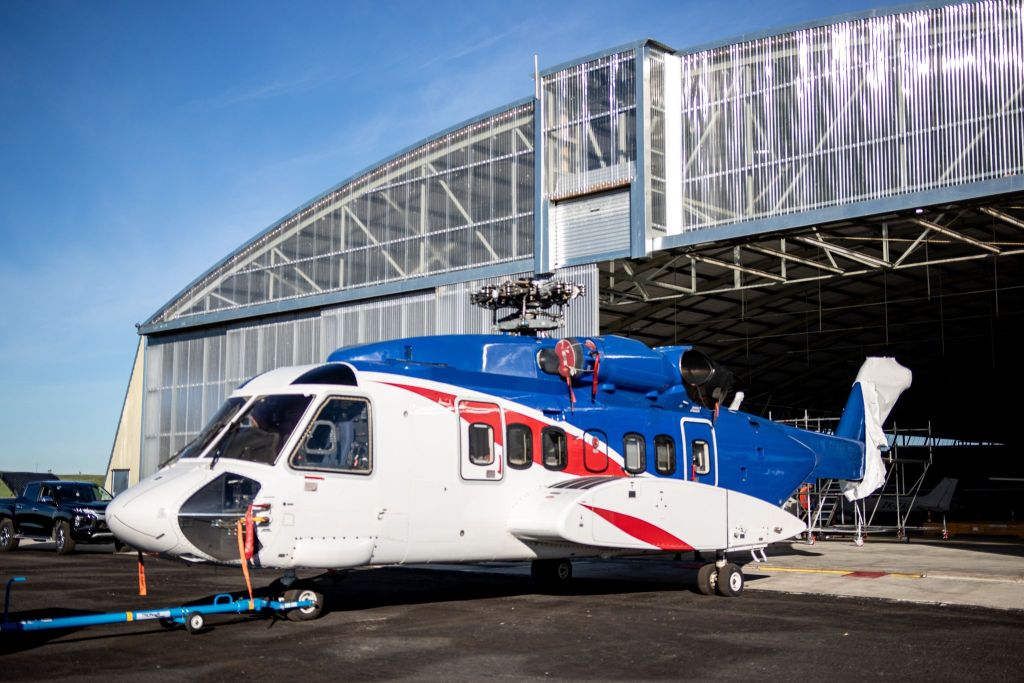
The Love At First Insight mission concluded the first phase of the recovery program and for the first time included a helicopter in the recovery process by observing Electron’s descent. Even before that, Rocket Lab performed many successful helicopter captures with replica stages.
The There and Back Again mission marked the first attempt of a mid-air helicopter capture of the Electron launch vehicle as it returned to Earth from space. The mid-air capture was successful; however, shortly after the catch, the pilot detected different load characteristics than experienced in previous recovery tests. This led to a release for a marine recovery.
The Catch Me If You Can mission did not achieve the mid-air catch due to a telemetry loss during Stage 1 reentry.
Starting from the mission The Beat Goes On, the company decided to focus solely on marine recovery operations. On this mission, the team returned the first stage to its manufacturing facilities after returning to Earth under a parachute.
The Baby Come Back mission tested a few upgrades on Electron, including new waterproofing features (improved sealing solutions for the interstage, powerpack, and some internal components on the Rutherford engines) to protect its key components from the environment of an ocean splashdown, as well as making the engines fully resilient. Moreover, the Electron on this mission had a lighter version of the parachute optimized for splashdown recovery. Lastly, for the first time, the company used a two-point lifting method to move the recovered stage onto the ship.

We Love The Night Life was Rocketlab’s latest successful attempt of recovering a booster. Not only did teams recover the booster after splashdown, but one of the booster’s engine has been re-flown. One of the outboard engines has flown on There And Back Again back in May of 2022, marking We Love The Night Life its second trip to space.
This time for For Four Of A Kind, Electron will not feature any re-flown engines and will mark Rocketlab’s 9th overall recovery attempt.
Timeline
Pre-Launch
| Hrs:Min:Sec From Lift-Off | Events |
| – 06:00:00 | Road to the launch site is closed |
| – 04:00:00 | Electron is raised vertical, fueling begins |
| – 02:30:00 | Launch pad is cleared |
| – 02:00:00 | LOx load begins |
| – 02:00:00 | Safety zones are activated for designated marine space |
| – 00:30:00 | Safety zones are activated for designated airspace |
| – 00:18:00 | GO/NO GO poll |
| – 00:02:00 | Launch auto sequence begins |
| – 00:00:02 | Rutherford engines ignite |
Launch
| Hrs:Min:Sec From Lift-Off | Events |
| 00:00:00 | Liftoff |
| +00:00:55 | Vehicle supersonic |
| +00:01:07 | Max Q |
| +00:02:25 | Main Engine Cut Off (MECO) on Electron’s first stage |
| +00:02:28 | Stage 1 separates from Stage 2 |
| +00:02:31 | Electron’s Stage 2 Rutherford engine ignites |
| +00:03:07 | Fairing separation |
| +00:04:26 | Stage 1 apogee |
| +00:06:28 | Battery hot-swap |
| +00:07:08 | Stage 1 drogue parachute deployment |
| +00:07:25 | Stage 1 is subsonic |
| +00:08:00 | Stage 1 main parachute deployment |
| +00:09:20 | Second Engine Cut Off (SECO) on Stage 2 |
| +00:09:24 | Stage 2 separation from Kick Stage |
| +00:18:04 | Splashdown predicted to have occurred |
| +00:48:23 | Kick Stage Curie engine ignition |
| +00:50:27 | Curie engine Cut Off |
| ~+01:17:00 | Payload Deployed |
What Is Electron?
Rocket Lab’s Electron is a small-lift launch vehicle designed and developed specifically to place small satellites (CubeSats, nano-, micro-, and mini-satellites) into LEO and Sun-synchronous orbits (SSO). Electron consists of two stages with optional third stages.
Electron is about 18.5 meters (60.7 feet) in height and only 1.2 meters (3.9 feet) in diameter. It is not only small in size, but also light-weight. The vehicle structures are made of advanced carbon fiber composites, which yields an enhanced performance of the rocket. Electron’s payload lift capacity to LEO is 300 kg (~660 lbs).
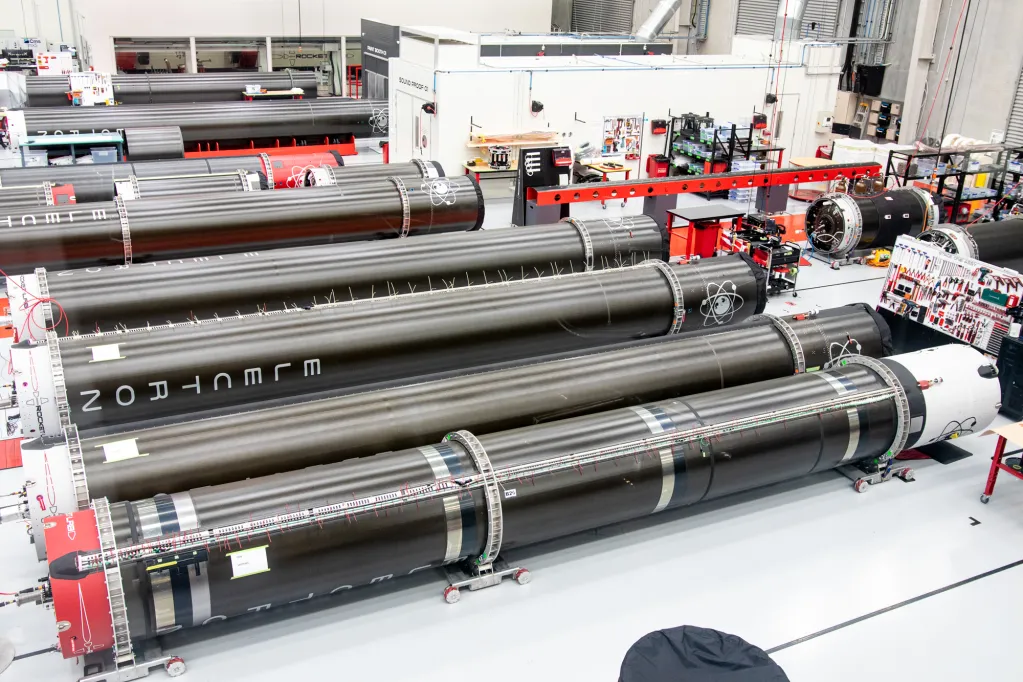
The maiden flight It’s A Test was launched on May 25, 2017, from Rocket Lab’s Launch Complex-1 (LC-1) in New Zealand. On this mission, a failure in the ground communication system occurred, which resulted in the loss of telemetry. Even though the company had to manually terminate the flight, there was no larger issue with the vehicle itself. Since then, Electron has flown a total of 42 times (38 of them were fully successful) and delivered 172 satellites into orbit.
First And Second Stage
| First Stage | Second Stage | |
|---|---|---|
| Engine | Nine (9) Rutherford engines | One (1) vacuum optimized Rutherford engine |
| Thrust Per Engine | 24 kN (5,600 lbf) | 25.8 kN (5,800 lbf) |
| Specific Impulse (ISP) | 311 s | 343 s |
Electron’s first stage is composed of linerless common bulkhead tanks for propellant, and an interstage, and powered by nine sea-level Rutherford engines. The second stage also consists of tanks for propellant (~2,000 kg of propellant) and is powered by a single vacuum optimized Rutherford engine. The main difference between these two variations of the Rutherford engine is that the latter has an expanded nozzle that results in improved performance in near-vacuum conditions.
For the Love At First Insight mission, the company introduced an update to the second stage by stretching it by 0.5 m. Moreover, they flew an Autonomous Flight Termination System (AFTS) for the first time.
Rutherford Engine
Rutherford engines are the main propulsion source for Electron and were designed in-house, specifically for this vehicle. They are running on rocket-grade kerosene (RP-1) and liquid oxygen (LOx). There are at least two things about the Rutherford engine that make it stand out.
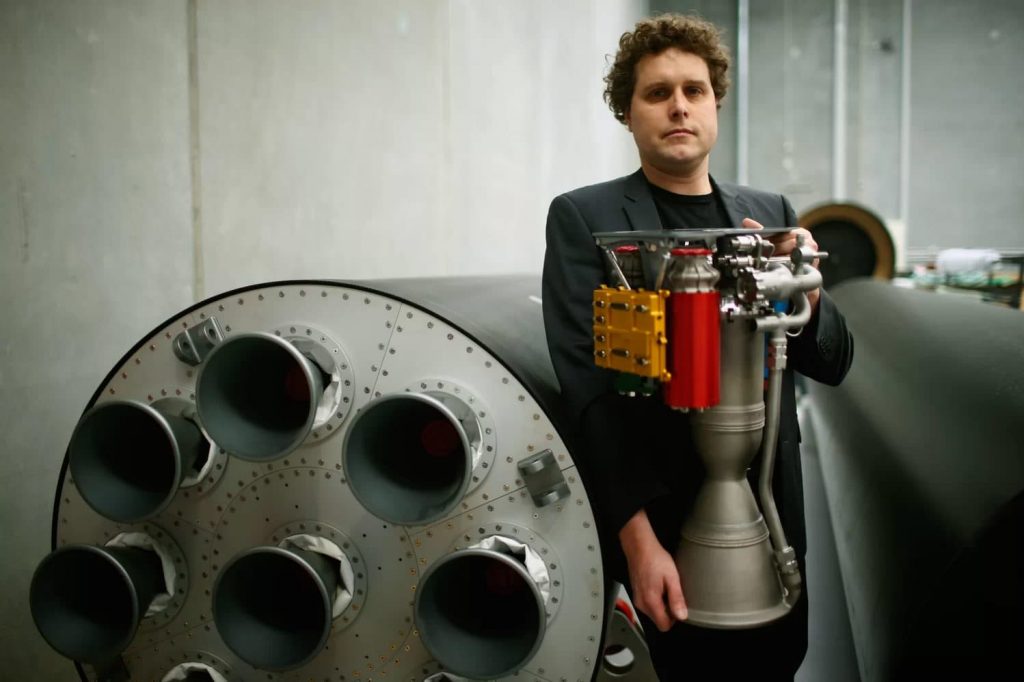
Firstly, all primary components of Rutherford engines are 3D printed. Main propellant valves, injector pumps, and engine chamber are all produced by electron beam melting (EBM), which is one of the variations of 3D printing. This manufacturing method is cost-effective and time-efficient, as it allows to fabricate a full engine in only 24 hours.
Rutherford is the first RP-1/LOx engine that uses electric motors and high-performance lithium polymer batteries to power its propellant pumps. These pumps are crucial components of the engine as they feed the propellants into the combustion chamber, where they ignite and produce thrust. However, the process of transporting liquid fuel and oxidizer into the chamber is not trivial. In a typical gas generator cycle engine, it requires additional fuel and complex turbo-machinery just to drive those pumps. Rocket Lab decided to use battery technology instead, which allowed eliminating a lot of extra hardware without compromising the performance.
Different Third Stages
Kick Stage
Electron has optional third stages, also known as the Kick Stage, Photon, and deep-space version of Photon. The Kick Stage is powered by a single Curie engine that can produce 120 N of thrust. Like Rutherford, it was designed in-house and is fabricated by 3D printing. Apart from the engine, the Kick Stage consists of carbon composite tanks for propellant storage and 6 reaction control thrusters.
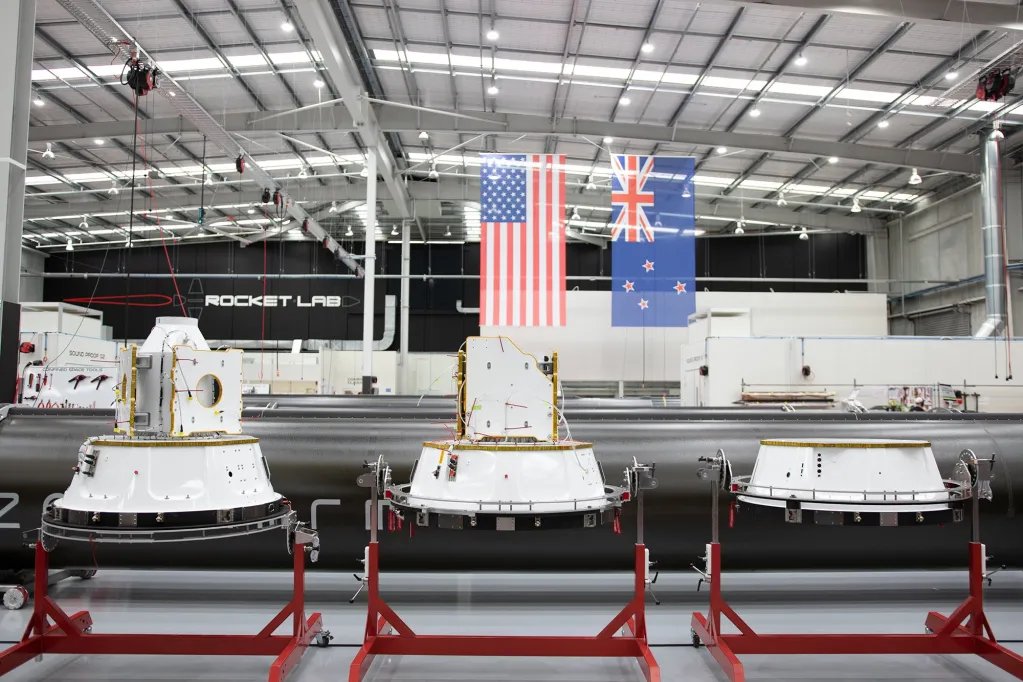
The Kick Stage in its standard configuration serves as in-space propulsion to deploy Rocket Lab’s customers’ payloads to their designated orbits. It has re-light capability, which means that the engine can re-ignite several times to send multiple payloads into different individual orbits. A recent example includes Electron 19th mission, They Go Up So Fast, launched in in 2021. The Curie engine was ignited to circularize the orbit, before deploying a payload to 550 km. Curie then re-lighted to lower the altitude to 450 km, and the remaining payloads were successfully deployed.
Photon And Deep-space Photon
Rocket Lab offers an advanced configuration of the Kick Stage, its Photon satellite bus. Photon can accommodate various payloads and function as a separate operational spacecraft supporting long-term missions. Among the features that it can provide to satellites are power, avionics, propulsion, and communications.
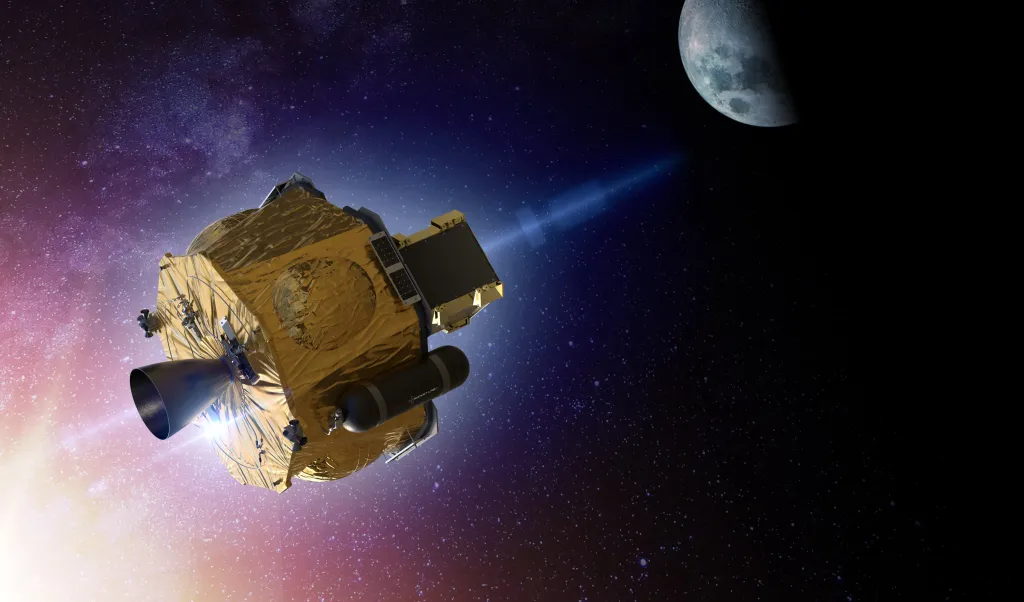
But there is more to it. Photon also comes as a deep-space version that will carry interplanetary missions. It is powered by a HyperCurie engine, an evolution of the Curie engine. The HyperCurie engine is electric pump-fed, so it can use solar cells to charge up the batteries in between burns. It has an extended nozzle to be more efficient than the standard Curie, and runs on some “green hypergolic fuel” that Rocket Lab has not yet disclosed.


