

Featured image (enhance here): John Pisani / Cosmic Perspective
Liftoff Time | January 30, 2024 – 17:07:21 UTC | 12:07:21 EST (instantaneous) |
|---|---|
Mission Name | CRS2 NG-20 (Cygnus SS Patricia “Patty” Hilliard Robertson) |
Launch Provider | SpaceX |
Customer | National Aeronautics and Aerospace Administration (NASA) Northrop Grumman |
Rocket | Falcon 9 v1.2 Block 5 booster B1077-10; 54.50-day turnaround |
Launch Location | Space Launch Complex 40 (SLC-40), Cape Canaveral Space Force Station, Florida, USA |
Payload mass | Around ~8,000 kg (~17,600 lb), including Cygnus’ mass 3,726 kg (8,214 lb) as Cygnus’ cargo |
Where did the spacecraft go? | International Space Station (ISS); circular low-Earth orbit at ~426 km (~265 mi) altitude, and ~51.6 degrees inclination; initially, 245 km x 51.64° |
Did they attempt to recover the first stage? | Yes |
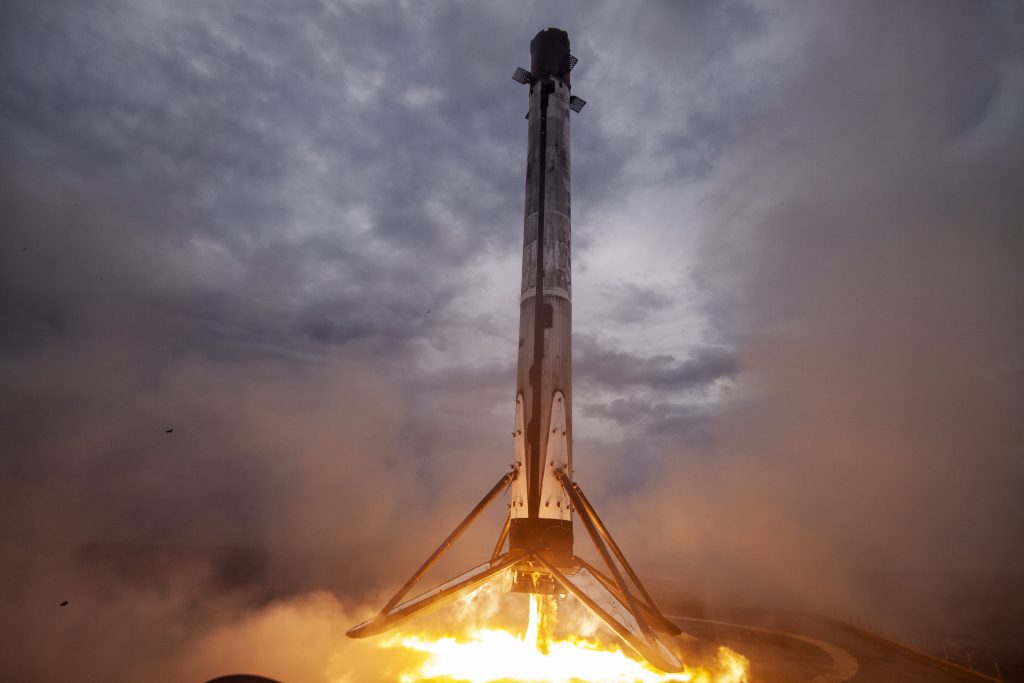
Where did the first stage land? | The booster softly touched down on Landing Zone 1 (LZ-1), ~9.0 km (~5.6 mi) away from the launch pad |
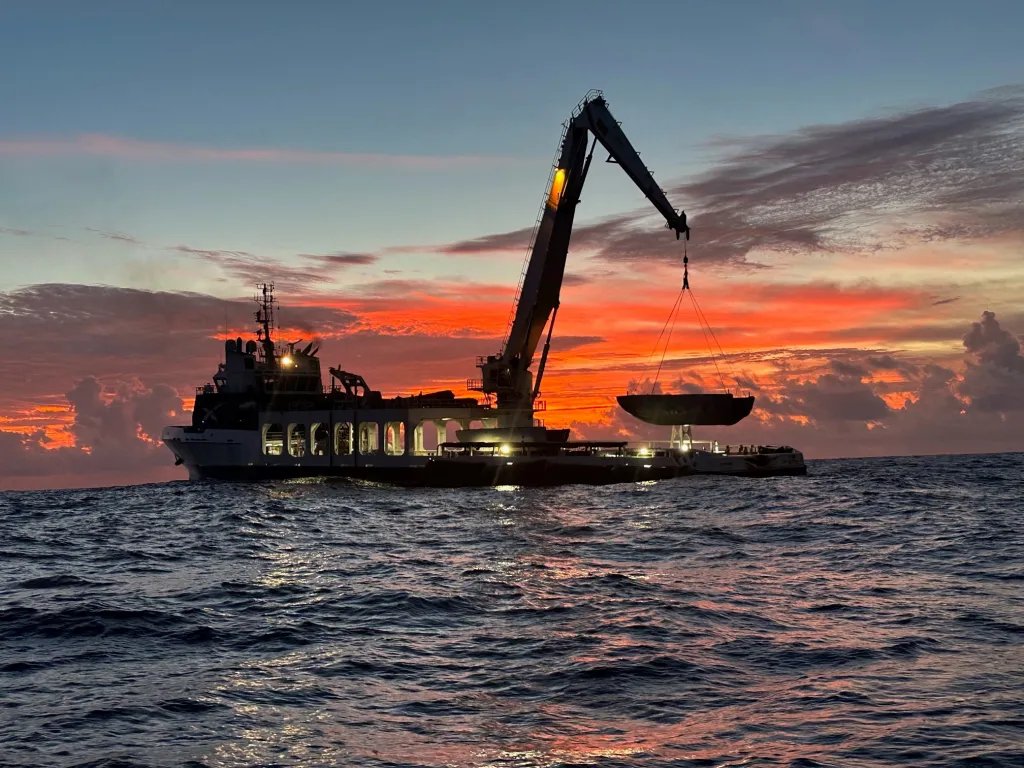
Did they attempt to recover the fairings? | Yes, and they were be recovered from the water ~465 km downrange by Doug |
Are these fairings new? | Yes, and they present a customization for Cygnus flights |
This was the: | – 21st Cygnus mission overall – 4th Cygnus mission on a non-Antares rocket – 1st Cygnus mission on a Falcon 9 – 295th Falcon 9 launch – 226th Falcon 9 flight with a flight-proven booster – 240th reflight of a booster – 9th reflight of a booster in 2024 – 269th booster landing – 195th consecutive landing (a record) – 10th launch for SpaceX in 2024 – 166th SpaceX launch from SLC-40 – 21st orbital launch attempt of 2024 |
Where to re-watch | SpaceX’s official livestream on X NASA’s official livestream on Youtube Tim Dodd, the Everyday Astronaut, streamed the launch |
What’s All This Mean?

Northrop Grumman’s Cygnus spacecraft performs a Commercial Resupply Services (CRS) mission for NASA, NG-20, this time aboard SpaceX’s Falcon 9 launch vehicle. Hence, liftoff takes place from Space Launch Complex 40 (SLC-40), at Cape Canaveral Space Force Station, Florida. Heading will be north-east. Following the company’s tradition, this freighter receives the name SS Patricia “Patty” Hilliard Robertson, after the NASA astronaut. Besides and as a secondary objective, Falcon 9’s booster should return for a touchdown on Landing Zone 1.
Once Cygnus separates from the rocket’s second stage, its journey to the ISS begins. Using its own propulsion, the Hilliard Robertson supply ship should see its orbit increase until a rendezvous with the orbiting laboratory is possible.
In particular, astronaut Jasmin Moghbeli (back-up, Loral O’Hara) is in charge of operating a robotic arm, Canadarm2, to berth the spacecraft to the Earth-facing (nadir) port of the Unity module. The stay of the Cygnus should extend for about four months, to later depart completing more tasks. For example, it could carry out experiments, deploy satellites, and dispose of waste by burning during reentry.
Presently, NG-20 is scheduled to rendezvous with the ISS on February 1, at 09:20 UTC.

How Did It Go?
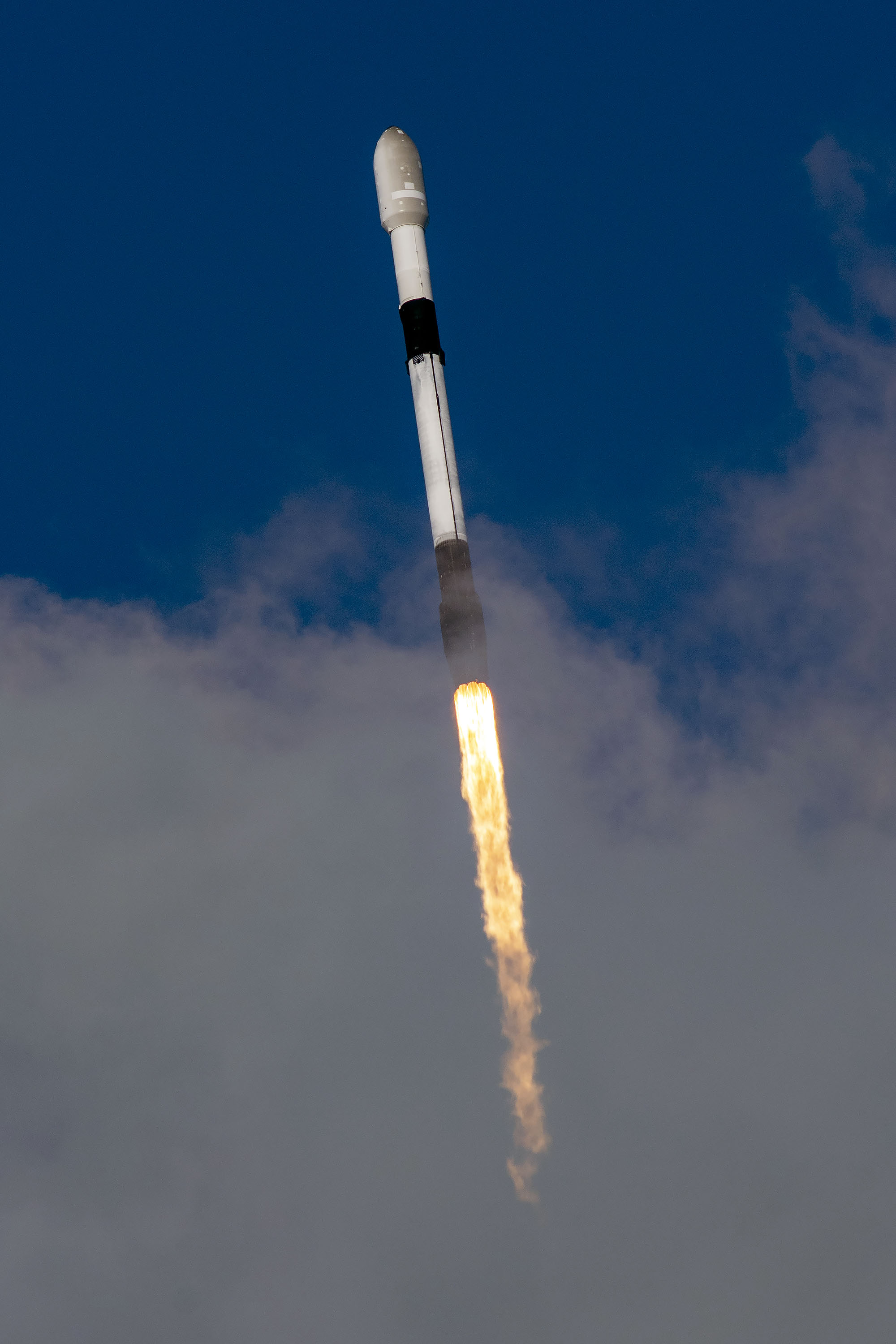
As was the plan, the Falcon 9 rocket lifted off on time powered by its nine Merlin engines. It took to the skies carrying the Cygnus spacecraft within its fairing, and successfully completed each and every phase of its flight. The booster returned and flawlessly landed back on terra firma. Meanwhile, the second stage continued accelerating Northrop Grumman’s freighter, to finally deploy it into the targeted orbit. As a result, the launch turned out a complete success, and the NG-20 was en route to the ISS. It took approximately 40 hours to meet with the orbital outpost.
On February 1, the Cygnus cargo vessel rendezvoused with the station, with capture performed by O’Hara taking place at 09:59 UTC. The following steps involved bringing the spacecraft right to the designated port — Unity nadir. Once in position, the four latches from the installation mechanism initially closed. That is, the first stage of the installation process, or soft capture. Subsequently, 16 bolts ensured Cygnus became one with the ISS. This was the second stage of the installation process, or hard capture.
Thus, at 12:14 UTC, the freighter was finally fully installed. Only leak checks and hatch opening remained before astronauts could board it.
What Is CRS2 NG-20?
Astronauts living on the ISS are able to recycle many consumables, but some replenishment of their provisions still has to take place. Moreover, the orbital lab’s crew needs other items, be it spare parts, new hardware, experiments, cargo, and so on. All of them also require transportation to their destination in space. That is precisely the purpose of the NG-20 mission, awarded by NASA to Northrop Grumman through CRS contracts — notice this is the second phase of said services agreement.
Furthermore, it is very important to highlight that a Cygnus spacecraft launches atop a Falcon 9 for the very first time. As a matter of fact, Northrop Grumman typically uses its Antares rockets to haul these cargo ships. However, there have been previous instances where the freighter reached orbit impelled by another rocket: the Atlas V. The present mission occurs after the last flight of the Antares 230+ rocket on the NG-19 mission. Follow the link to read more how about this cargo vessel ended up riding on this rocket, and more.
For the time being, in order to fill the gap, Northrop Grumman purchased three flights aboard SpaceX’s rocket: NG numbers 20, 21, and 22. However, should the new Antares suffer delays, there are chances of seeing more Cygnus flights via Falcon 9.
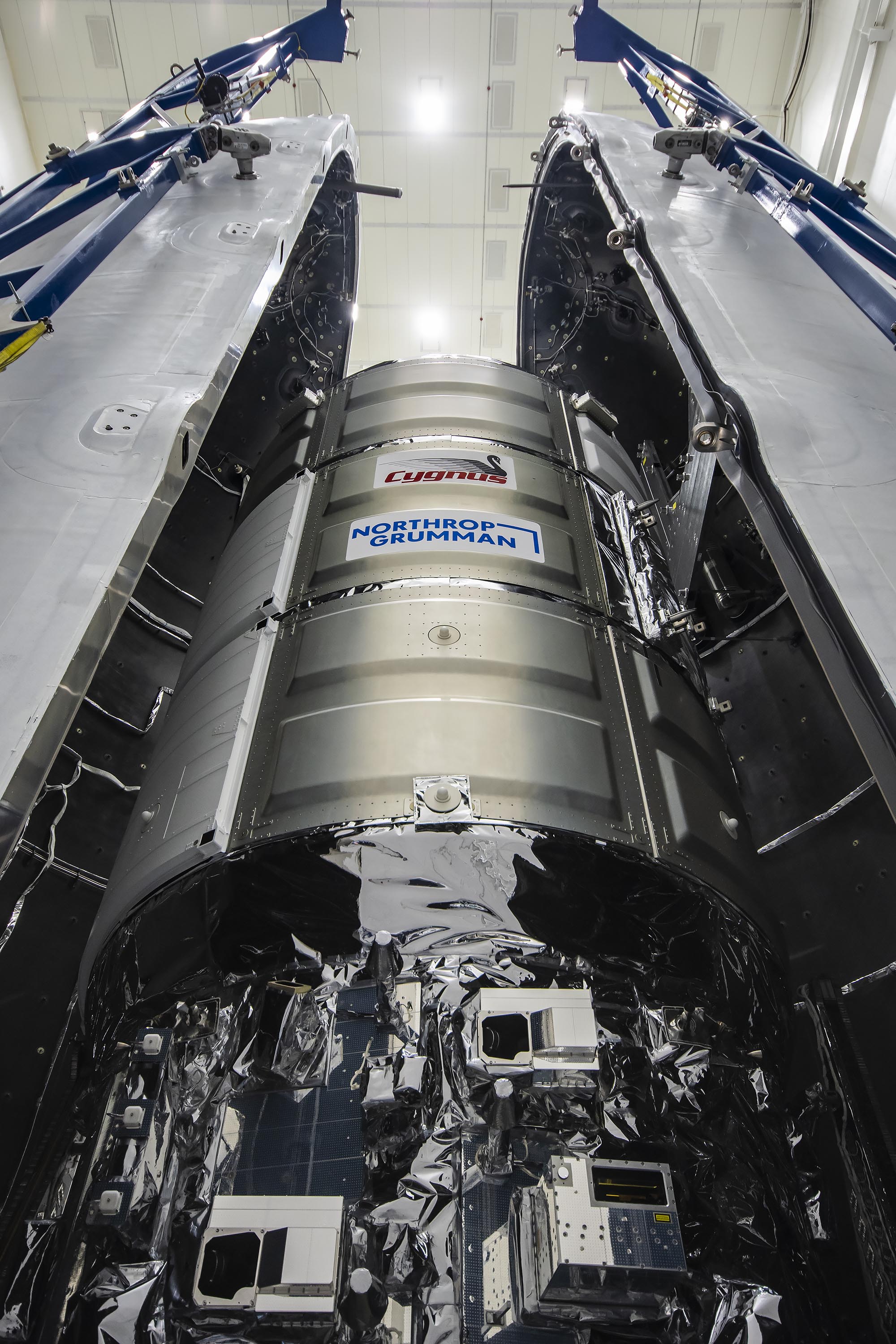
In addition to what we present in this article, you can always learn more about this mission reading NASA’s overview on NG-20. Another interesting source for broadening your knowledge about this is the ISS website’s overview on it.
Patricia “Patty” Hilliard Robertson
Northrop Grumman names its Cygnus ships after individuals who have significantly contributed to spaceflight. Dr. Patricia “Patty” Hilliard Robertson was a scheduled member for the ISS Expedition 2 mission. However, she tragically died during a private flight. Hilliard Robertson became a NASA Group 17 astronaut, and Tracy Caldwell-Dyson, was one of her classmates. The latter will visit the ISS while the NG-20 spacecraft is docked to it.

Her interests led her to excel in many fields, achieving the following academic accomplishments:
- Bachelor’s degree in Biology from Indiana University of Pennsylvania
- Medical degree from the Medical College of Pennsylvania
- Completed a three-year residency in Family Medicine
- Certified by the American Board of Family Practice
- Completed a two-year Space Medicine fellowship at the University of Texas Medical Branch and NASA Johnson Space Center
What’s On CRS2 NG-20?
The many goods flying as this mission’s payload will come in handy for both Expedition 70 and 71’s astronauts. As has been noted, they serve to achieve a variety of goals. We will review them generally in the next few subsections.
NG-20’s Cargo Mass Breakdown
The following tables list only up-mass. However, when Cygnus finally leaves the station, it can take up to ~3,800 kg (~8,400 lb) of discarded items to burn upon reentry. Unberthing of NG-20 is planned to take place in May.
General
| Mass [kg (lb)] | |
|---|---|
| Total | 3,726 (8,214) |
| Pressurized | 3,712 (8,184) |
| Unpressurized | 14 (30) |
By Type
| Mass [kg (lb)] | |
|---|---|
| Crew Supplies | 1,129 (2,490) |
| Science Investigations | 1,369 (3,017) |
| Vehicle Hardware | 1,131 (2,493) |
| Spacewalk Equipment | 16 (35) |
| Computer Resources | 67 (149) |
Science On NG-20
- Robotic Surgery Tech Demo: this will be the first ever robot on the ISS with the ability to perform surgery. For now, though, it will only practice by grasping and cutting rubber bands. The aim behind this demo is to determine, among others, the effects of latency, given that the human operator will be on Earth. Potentially, this experiment could be beneficial for future long-term crewed missions, as well as surgery in rural areas on Earth. Read more about this on its dedicated NASA page.

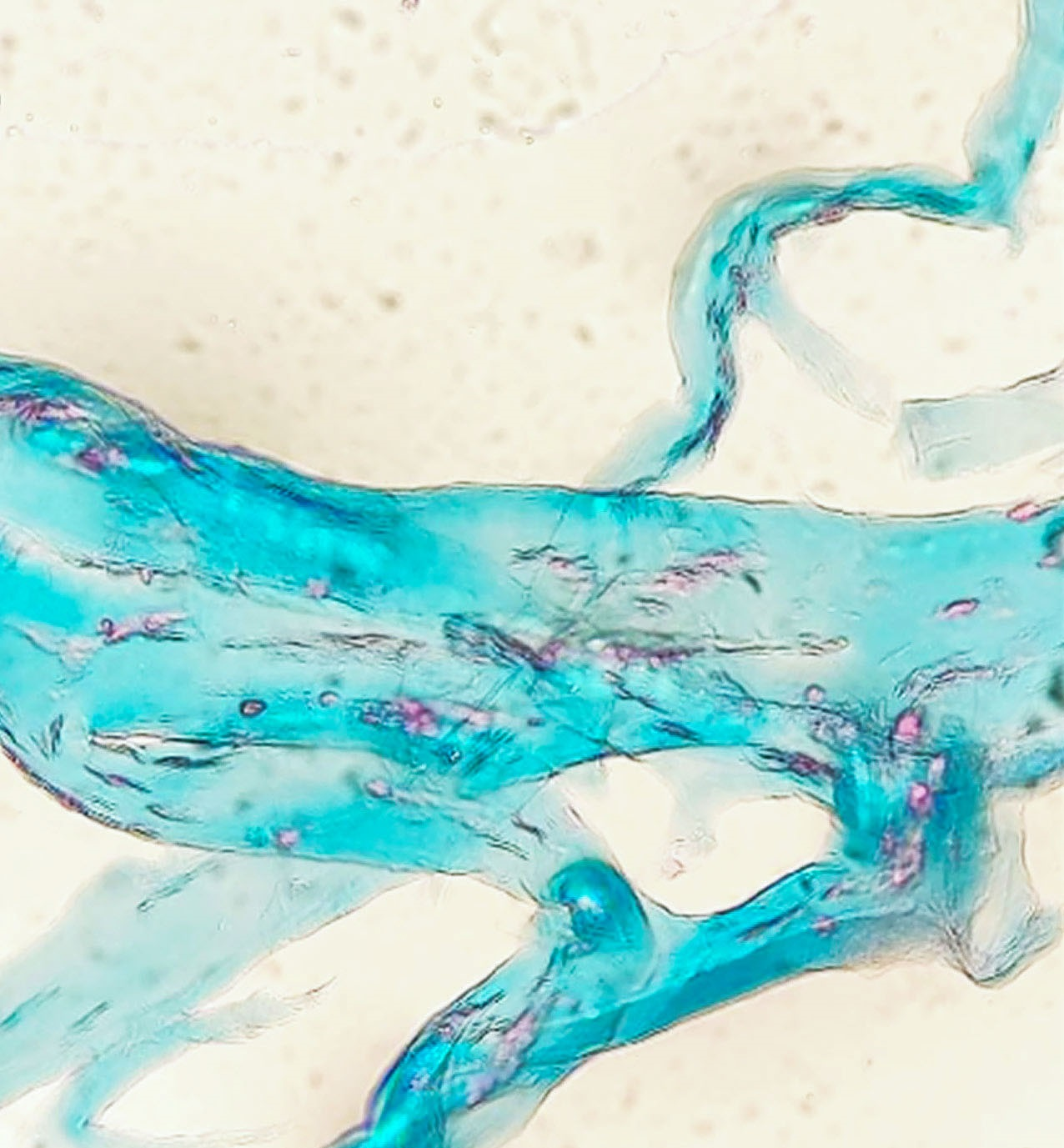
- Compartment Cartilage Tissue Construct: two technologies are part of this demo. In the first place, Janus Base Nano-Matrix will attempt to build cartilage in a microgravity environment. Secondly, Janus Base Nanopiece should provide a means of battling cartilage degeneration. The latter naturally takes place with age, but also in the mentioned environment. Hence, the results from this study could see application in space, as well as here on our planet. This is NASA’s page dedicated to this project, where you can read more about it.
- Metal 3D Printer: the goal of this research project from ESA is to test how this process behaves in microgravity. Similarly to other experiments, this one will be relevant for future deep-space missions. Additionally, it will be interesting comparing in-space manufactured parts against others produced back on Earth. This is part of the agency’s Huginn mission, previously launched on SpaceX’s Crew-7. For further reading, go to NASA’s dedicated page.


- Manufacturing of Semiconductors and Thin-Film Integrated Coatings: or MSTIC, also explores the effects that being in orbit has on a manufacturing process. In this case, the applications are multiple, including semiconductors and energy-harvesting devices, e.g., solar panels, among others. Curiously, materials produced in this environment could actually outperform their counterparts from Earth. To read more about this, go to the dedicated page on NASA’s website.
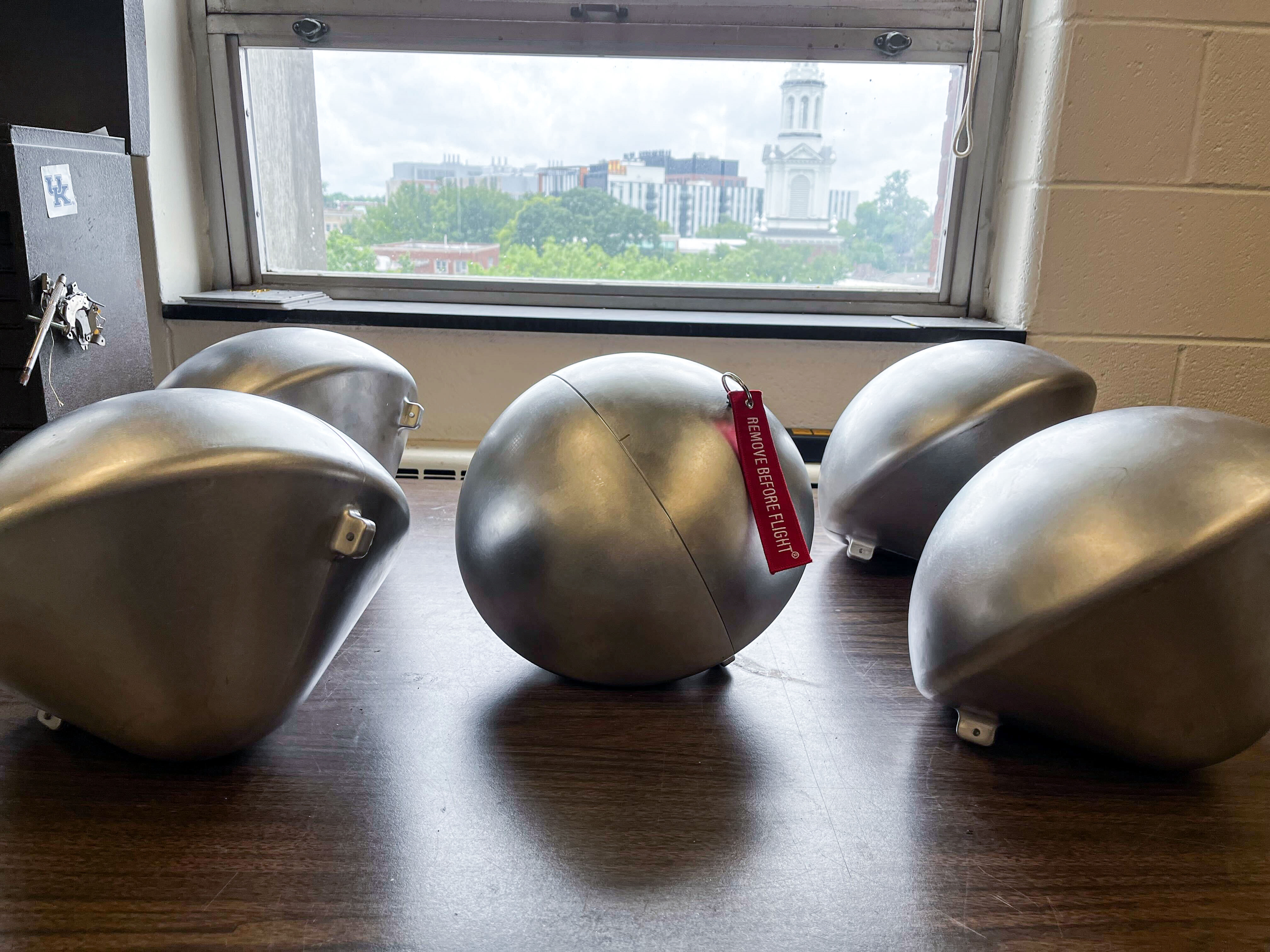
- Kentucky Re-entry Probe Experiment-2: or KREPE-2, is a sequel to KREPE-1. During this research project, which starts after the NG-20 Cygnus spacecraft leaves the ISS, five different heat shield samples will undergo testing. That is, the returning freighter will deploy them, so that they can re-enter Earth’s atmosphere. Provided by NASA and the University of Kentucky, they will further the understanding of their materials. Additionally, they will help in the validation of the numerical models used in computer simulations. Read more on NASA’s dedicated page.
Hardware For The ISS
NASA lists the following hardware comprising NG-20’s cargo:
- Hydrogen Dome Assembly
- Ion Exchange Bed
- Catalytic Reactor
- Biocide Maintenance Canister
- Cylinder Flywheel
- International Space Station Roll Out Solar Array Modification Kit 7
- Urine Processor Assembly Pressure Control and Pump Assembly
- Collection Packet and Adapter
The Cygnus Spacecraft On NG-20

As has been mentioned, its development was the responsibility of Orbital (now Northrop Grumman) in order to fulfill a COTS contract with NASA. Presently, Northrop Grumman employs this maneuvering spacecraft to resupply the ISS, as agreed per CRS contracts. Under the first such contract, Cygnus hauled about 30,000 kg (~66,000 lb) of cargo to the ISS, with another 20,000 kg (~44,000 lb) expected when the second contract is completed.
Cygnus ships consist of a service module built in-house, while Thales Alenia from Italy provides the pressurized service module. Moreover, its propulsion system comes from GEOStar telecommunications satellites, with solar panels for the spacecraft to procure its electric power built by Northrop Grumman. It features an internal volume of 27m3 (~950 ft3), 6.39 m (~21 ft) in length, while it loads 800 kg (~1,760 lb) of propellants, with a total liftoff mass of up to 8,050 kg (17,700 lb).
A new version of Cygnus should debut together with the Antares 330 sometime in mid-2025 for the NG-23 mission. By extending the payload module in 1.5 m (~5 ft), the spacecraft will be capable of hauling up to 5,000 kg (~11,000 lb) of cargo.
Cygnus Missions Prior To NG-20
| NG’s CRS2, Flight # | Cygnus Mission Name | Date, Time UTC |
|---|---|---|
| 4 | NG-15 | February 20, 2021, 17:36 |
| 5 | NG-16 | August 10, 2021, 22:01 |
| 6 | NG-17 | February 19, 2022, 17:40 |
| 7 | NG-18 | November 07, 2022, 10:27 |
| 8 | NG-19 | August 2, 2023, 00:31 |
What Is Falcon 9 v1.2 Block 5?
The Falcon 9 Block 5 is SpaceX’s partially reusable two-stage medium-lift launch vehicle. The vehicle consists of a reusable first stage, an expendable second stage, and, when in payload configuration, a pair of reusable fairing halves.
For this particular mission launching the Cygnus spacecraft, SpaceX implemented a new access ~1.5×1.2 m (~5×4 ft) door on the rocket’s fairing. This allows for last minute loading into the freighter — within the 24 hours prior to launch — which is specially useful when transporting certain payloads. Additionally, to completely fulfill customer’s needs, the company set up a new clean room meant to avoid contamination inside the fairing.
First Stage
The Falcon 9 first stage contains nine Merlin 1D+ sea-level engines. Each engine uses an open gas generator cycle and runs on RP-1 and liquid oxygen (LOx). Each engine produces 845 kN of thrust at sea level, with a specific impulse (ISP) of 285 seconds, and 934 kN in a vacuum with an ISP of 313 seconds. Due to the powerful nature of the engine, and the large amount of them, the Falcon 9 first stage is able to lose an engine right off the pad, or up to two later in the flight, and be able to successfully place the payload into orbit.
The Merlin engines are ignited by triethylaluminum and triethylborane (TEA-TEB), which instantly burst into flames when mixed in the presence of oxygen. During static fire and launch the TEA-TEB is provided by the ground service equipment. However, as the Falcon 9 first stage is able to propulsively land, three of the Merlin engines (E1, E5, and E9) contain TEA-TEB canisters to relight for the boost back, reentry, and landing burns.
Second Stage
The Falcon 9 second stage is the only expendable part of the Falcon 9. It contains a singular MVacD engine that produces 992 kN of thrust and an ISP of 348 seconds. The second stage is capable of doing several burns, allowing the Falcon 9 to put payloads in several different orbits.
SpaceX is currently flying two different versions of the MVacD engine’s nozzle. The standard nozzle design is used on high-performance missions. The other nozzle is a significantly shorter version of the standard, decreasing both performance and material usage; with this nozzle, the MVacD engine produces 10% less thrust in space. This nozzle is only used on lower-performance missions, as it decreases the amount of material needed by 75%. This means that SpaceX can launch over three times as many missions with the same amount of Niobium as with the longer design.
For missions with many burns and/or long coasts between burns, the second stage is able to be equipped with a mission extension package. When the second stage has this package it has a gray strip, which helps keep the RP-1 warm, an increased number of composite-overwrapped pressure vessels (COPVs) for pressurization control, and additional TEA-TEB.

Falcon 9 Booster
The booster supporting the CRS2 NG-20 mission was B1077-10; as the name implies, the booster had supported 9 previous missions. Following the landing, its designation changed to B1077-11.
| B1077’s previous missions | Launch Date (UTC) | Turnaround Time (Days) |
| Crew-5 | May 10, 2022 16:00 | N/A |
| GPS III SV06 | January 18, 2023 12:24 | 104.85 |
| Inmarsat I-6 | February 18, 2023 03:59 | 30.65 |
| Starlink Group 5-10 | March 29, 2023 20:01 | 39.67 |
| Dragon CRS-2 SpX-28 | June 05, 2023 15:47 | 67.82 |
| Galaxy 37 | August 03, 2023 05:00 | 58.55 |
| Starlink Group 6-13 | September 01, 2023 02:21 | 28.89 |
| Starlink Group 6-25 | October 30, 2023 23:20 | 59.87 |
| Starlink Group 6-33 | December 07, 2023 05:07 | 37.24 |
Following stage separation, the Falcon 9 conduct edthree burns. These burns allowed for a successful touch down of the booster on SpaceX’s Landing Zone 1 (LZ-1).

Falcon 9 Fairings
The Falcon 9’s fairing consists of two dissimilar reusable halves. The first half (the half that faces away from the transport erector) is called the active half, and houses the pneumatics for the separation system. The other fairing half is called the passive half. As the name implies, this half plays a purely passive role in the fairing separation process, as it relies on the pneumatics from the active half.
Both fairing halves are equipped with cold gas thrusters and a parafoil which are used to softly touch down the fairing half in the ocean. SpaceX used to attempt to catch the fairing halves, however, at the end of 2020 this program was canceled due to safety risks and a low success rate. On CRS2 NG-20 SpaceX successfully recovered the fairing halves from the water with their recovery vessel Doug.
In 2021, SpaceX started flying a new version of the Falcon 9 fairing. The new “upgraded” version has vents only at the top of each fairing half, by the gap between the halves, whereas the old version had vents placed spread equidistantly around the base of the fairing. Moving the vents decreases the chance of water getting into the fairing, making the probability of a successful scoop significantly higher.

CRS2 NG-20 Countdown
All times are approximate
| HR/MIN/SEC | EVENT |
|---|---|
| 00:38:00 | SpaceX Launch Director verifies go for propellant load |
| 00:35:00 | RP-1 (rocket-grade kerosene) loading underway |
| 00:35:00 | 1st stage LOX (liquid oxygen) loading underway |
| 00:16:00 | 2nd stage LOX loading underway |
| 00:07:00 | Falcon 9 begins engine chill prior to launch |
| 00:01:00 | Command flight computer to begin final prelaunch checks |
| 00:01:00 | Propellant tank pressurization to flight pressure begins |
| 00:00:45 | SpaceX Launch Director verifies go for launch |
| 00:00:03 | Engine controller commands engine ignition sequence to start |
| 00:00:00 | Falcon 9 liftoff |
CRS2 NG-20 Launch, Landing, And Deployment
All Times Approximate
| HR/MIN/SEC | EVENT |
|---|---|
| 00:01:07 | Max Q (moment of peak mechanical stress on the rocket) |
| 00:02:16 | 1st stage main engine cutoff (MECO) |
| 00:02:20 | 1st and 2nd stages separate |
| 00:02:27 | 2nd stage engine starts (SES-1) |
| 00:02:33 | Boostback Burn Starts |
| 00:02:55 | Fairing deployment |
| 00:03:22 | Boostback Burn Ends |
| 00:06:38 | 1st stage entry burn start |
| 00:06:55 | 1st stage entry burn ends |
| 00:07:50 | 1st stage landing burn start |
| 00:08:15 | 1st stage landing |
| 00:08:38 | 2nd stage engine cutoff (SECO-1) |
| 00:14:40 | NG-20 Deploys |