

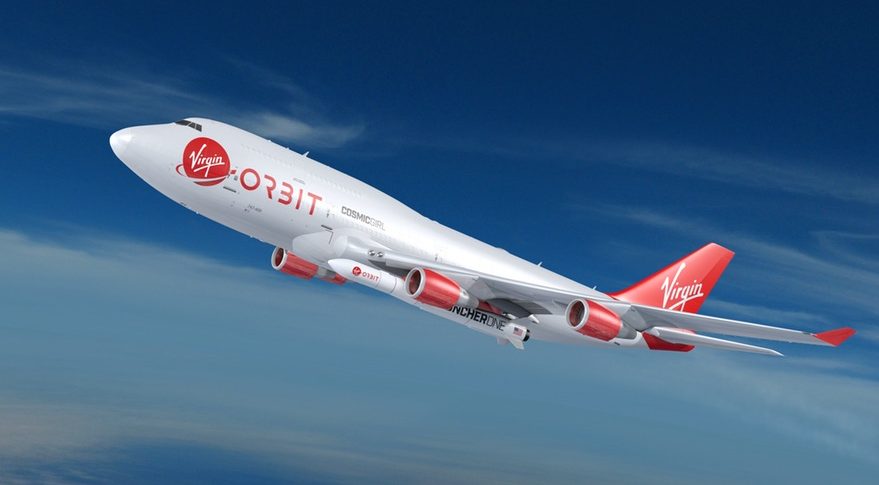
This is maiden orbital flight for the brand new LauncherOne system. It is an air-launched rocket carried aloft by a modified Boeing 747-400 dubbed Cosmic Girl. In mid-2019, Virgin Orbit did a drop test of the LauncherOne rocket, rehearsing all the events leading up to an actual launch. Now, it’s time to light this candle! Because this mission only has a mass simulator payload, we’ll focus on the specifics of this rocket and the method it uses to launch.
Lift Off Time
|
May 25, 2020 – 17:00 – 21:00 UTC | 10:00 – 14:00 PDT |
|---|---|
Mission Name and what it is |
Test Flight; an orbital test flight for the LauncherOne rocket. |
Launch Provider
|
Virgin Orbit |
Customer
|
Virgin Orbit |
Rocket |
LauncherOne |
Launch Location |
Mojave Air and Space Port; air-launched from Cosmic Girl, a Boeing 747-400 aircraft |
Payload mass |
Mass Simulator; <= 500 kg to SSO (<= 1100 pounds) |
Where are the satellites going? |
Low-Earth Orbit (LEO) |
Will they be attempting to recover the first stage? |
No |
Where will the first stage land? |
It will not land but burn up in the atmosphere. |
Will they be attempting to recover the fairings? |
No, this is not a capability of Virgin Orbit (yet). |
Are these fairings new? |
Yes |
This will be the: |
|
Where to watch |
Virgin Orbit will be live tweeting the launch, follow along here! Virgin Orbit on Twitter A video will be available at a later time. |
What is the LauncherOne Rocket?
LauncherOne will use the air-launch method similar to the one Northrop Grumman uses for their Pegasus rocket. Here, they haul it up to about 10,600 meters (35,000 feet) under the left wing of a Boeing 747-400 named Cosmic Girl. Now, the rocket weighs just around 22,600 kg (50,000 pounds) when fully fueled. This is a substantial weight to have on just one side of the plane. However, engineers have calculated just the correct amount of fuel to have on each wing to balance it out. In general, more fuel will be put in the right wing to make the plane more stable.
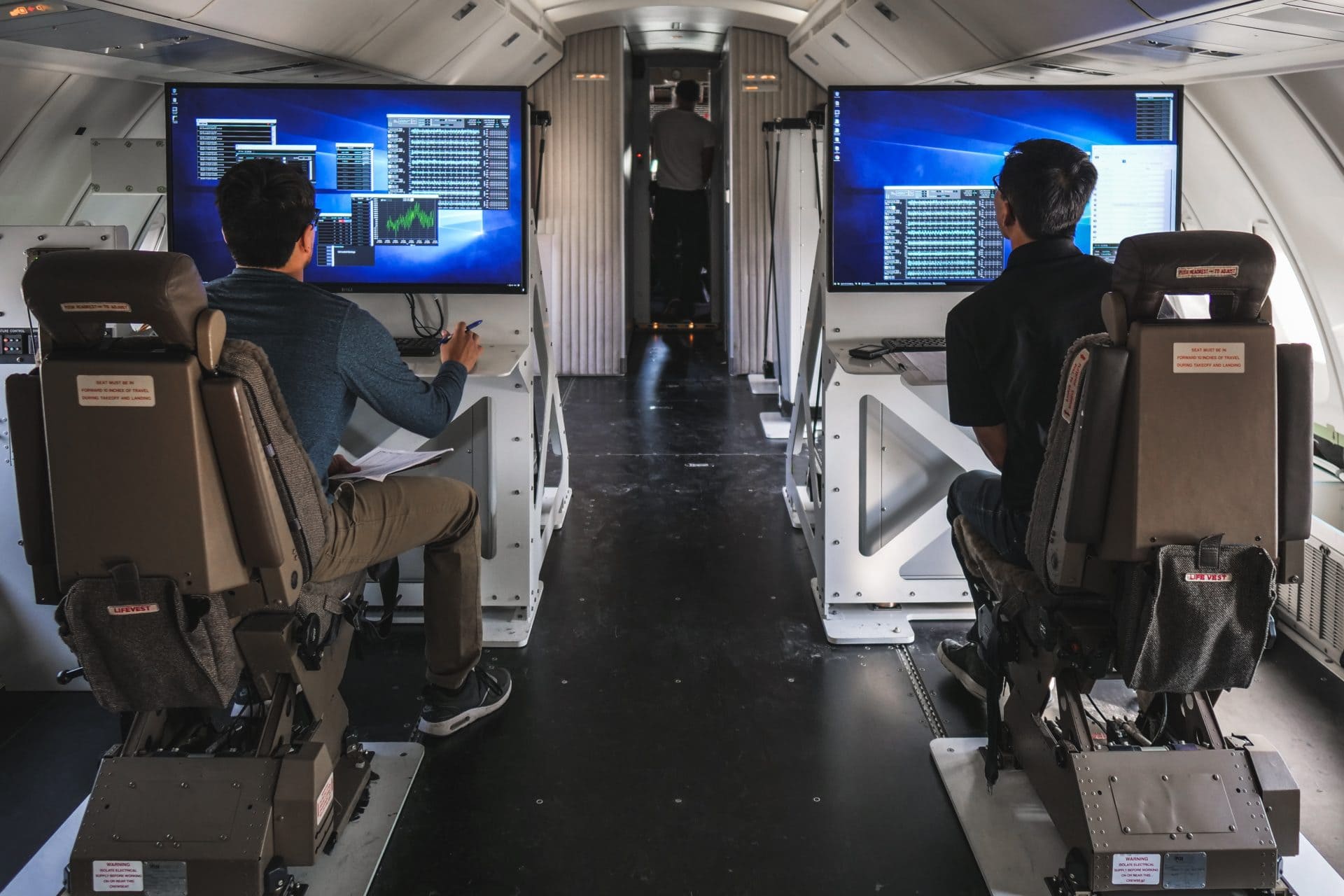
The Boeing 747-400 had all the passenger seating removed. However, they converted the upper first-class section into a mini-mission control center. Making these modifications saved about the same amount of weight as the rocket.
An interesting fact, Boeing designed the 747 to carry an extra payload under its wing. Their idea was that it could carry an extra jet engine–similar to a spare tire in a car–and transport it. In the late 1960s, when they designed the airplane, it would be hard to find a cargo plane capable of carrying such a load. Luckily for Virgin Orbit, other companies proved this external heavy cargo transport. So, they used this data to determine how to fly with a huge, heavy rocket on one side of the plane.
What is LauncherOne’s Launch Sequence?
Now the next question is, what does the launch sequence look like? After Cosmic Girl reaches its 10,600 meters (35,000 feet) altitude, the pilots pitch the plane upwards at a 27-degree angle. Then, controllers give the launch command from the “first-class” Mission Control. This triggers a sequence that involves multiple steps for safety. The launch sequence ensures there is no accidental jettison prior to actual commanded launch.
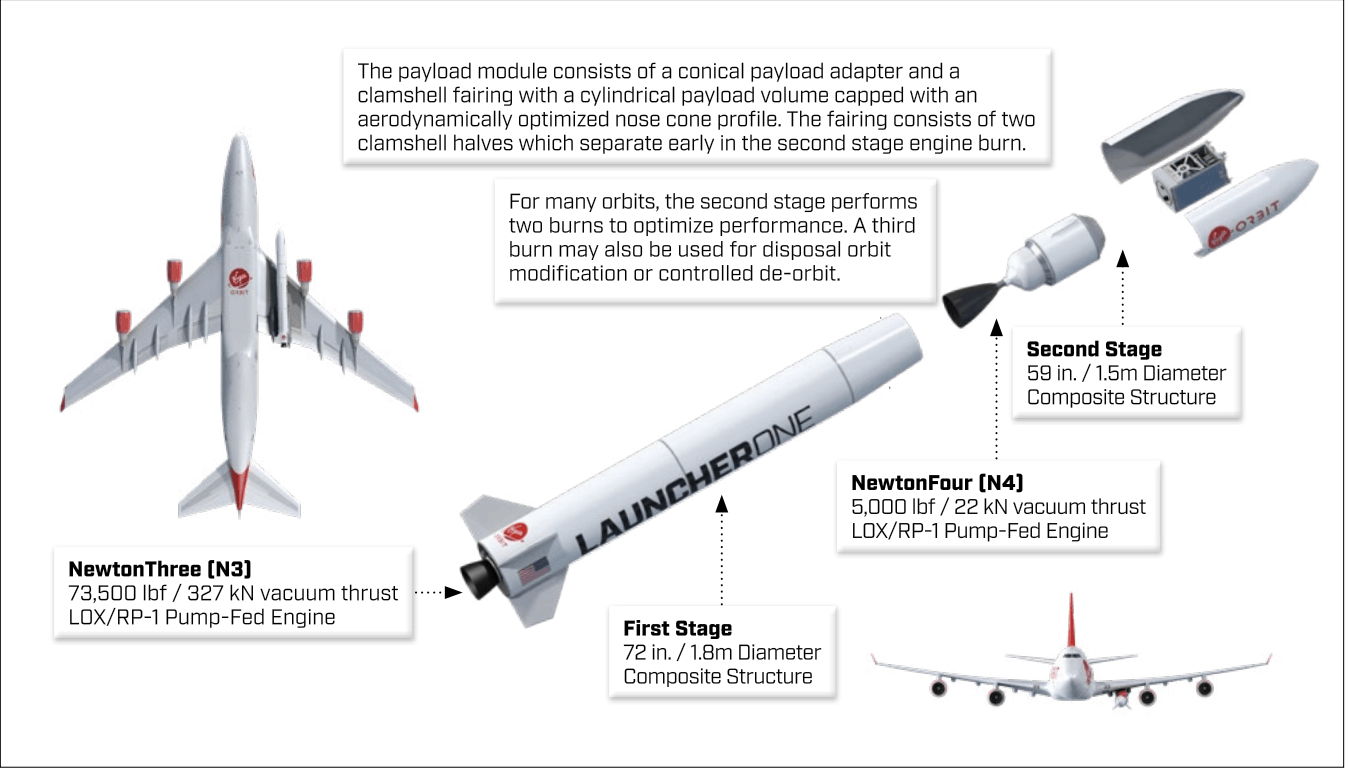
The red clamps holding the rocket release it from the pylon. After four seconds of free-fall, it ignites the NewtonThree engine to increase its velocity to about 12,870 km/h (8,000 mph). After a few minutes, the first stage exhausts its kerosene (RP-1) and LOX propellants. The first stage then separates from the second and burns up in the atmosphere.
Shortly after stage separation, the second stage’s NewtonFour Engine fires. It propels the payload the rest of the way to orbit with just the right mix of RP-1 and LOX. Sometimes, the second stage will perform two or three burns for a controlled deorbit or to increase performance. Once the rocket is above the atmosphere, the fairing halves will separate and burn up in the atmosphere.
Why Air-launch?
The ability to air-launch is a tremendous advantage for multiple reasons. If the weather is bad in one area, the plane can fly to another area with calmer skies. Also, the rocket already gets a velocity boost from the plane. This boost saves on the amount of fuel needed to propel the rocket since it already is in motion.Finally, they carry the rocket out of the densest part of the atmosphere. At an altitude of 10,600 meters (35,000 feet) it has less air to fight through on launch.
However, there is one major disadvantage. Weight. Because Cosmic Girl can only carry so much weight, and fuel is heavy, Virgin reduced the payload’s weight. That means the maximum payload weight to LEO is 500 kg and to Sun Synchronous Orbit (SSO) is 300 kg.
On the other hand, this weight limitation does not impede Virgin Orbit’s principal mission. Their goal is to make space available to everyone. The cubesat industry is expanding. There is room for yet another launch vehicle capable of providing a cheaper way to launch small satellites for universities and STEM programs.
Stay informed by monitoring this Prelaunch Preview and SpaceLaunchNow for T-0 updates and more!