Lift Off Time(Subject to change) |
December 19, 2020 14:00 UTC | 09:00 EST |
|---|---|
Mission Name and what it is |
NROL-108, a classified mission for the National Reconnaissance Office |
Launch Provider
|
SpaceX |
Customer
|
National Reconnaissance Office |
Rocket |
Falcon 9 Block 5 B1059-5 Note: it turns out we have been notating booster flights incorrectly; internally SpaceX uses the dash. |
Launch Location |
Launch Complex 39A (LC-39A), Kennedy Space Center, Florida |
Payload mass |
Classified, under 7,000 kg |
Where are the satellites going? |
Classified LEO |
How is the weather? |
The weather is currently 90% go for launch (As of December 18, 2020 – 13:00 UTC) |
Will they be attempting to recover the first stage? |
Yes |
Where will the first stage land? |
LZ-1 |
Will they be attempting to recover the fairings? |
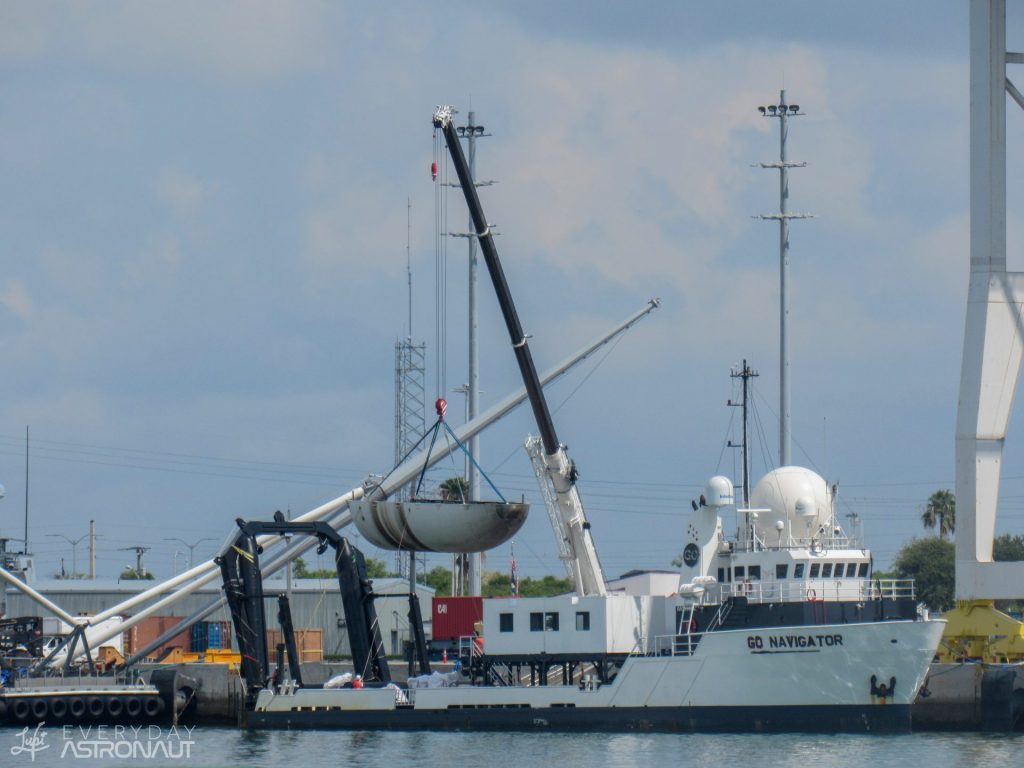
The fairings will be recovered from the water by GO Searcher and GO Ms. Tree. |
Are the fairings new? |
Yes |
This will be the: |
|
Where to watch |
What’s this all mean?
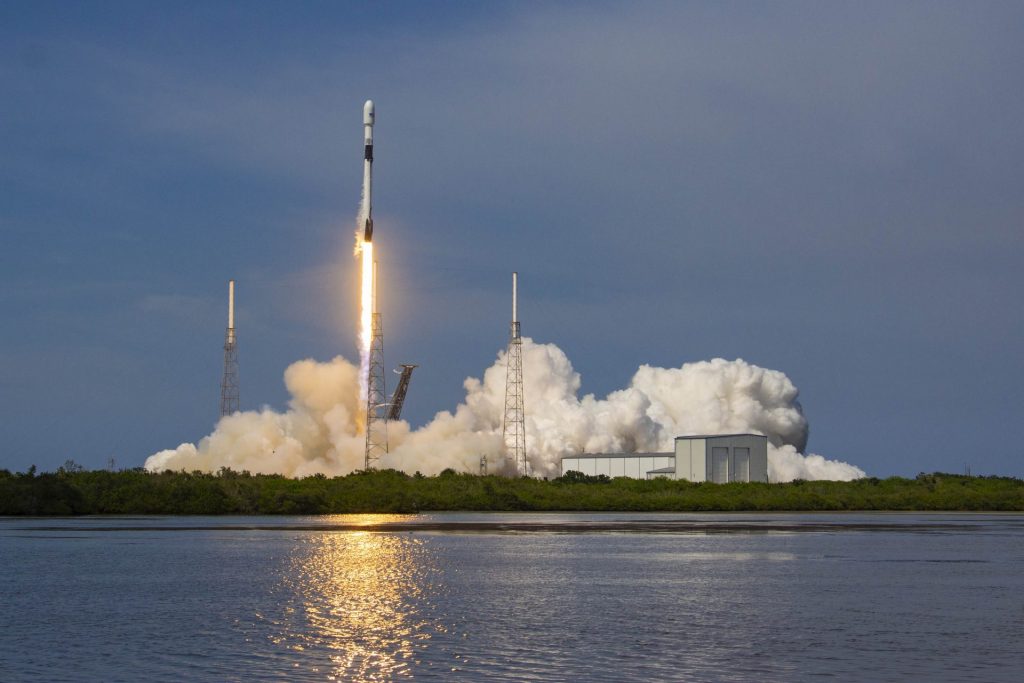
SpaceX will launch the NROL-108 classified payload for the National Reconnaissance Office. The Falcon 9 will lift off from Launch Complex 39A (LC-39A), from Kennedy Space Center, in Florida. Due to the classified nature of the payload, very little is known. However, the payload must have a mass of under 7,000 kg as it is a return to launch site (RTLS) mission.
What is Falcon 9 Block 5?
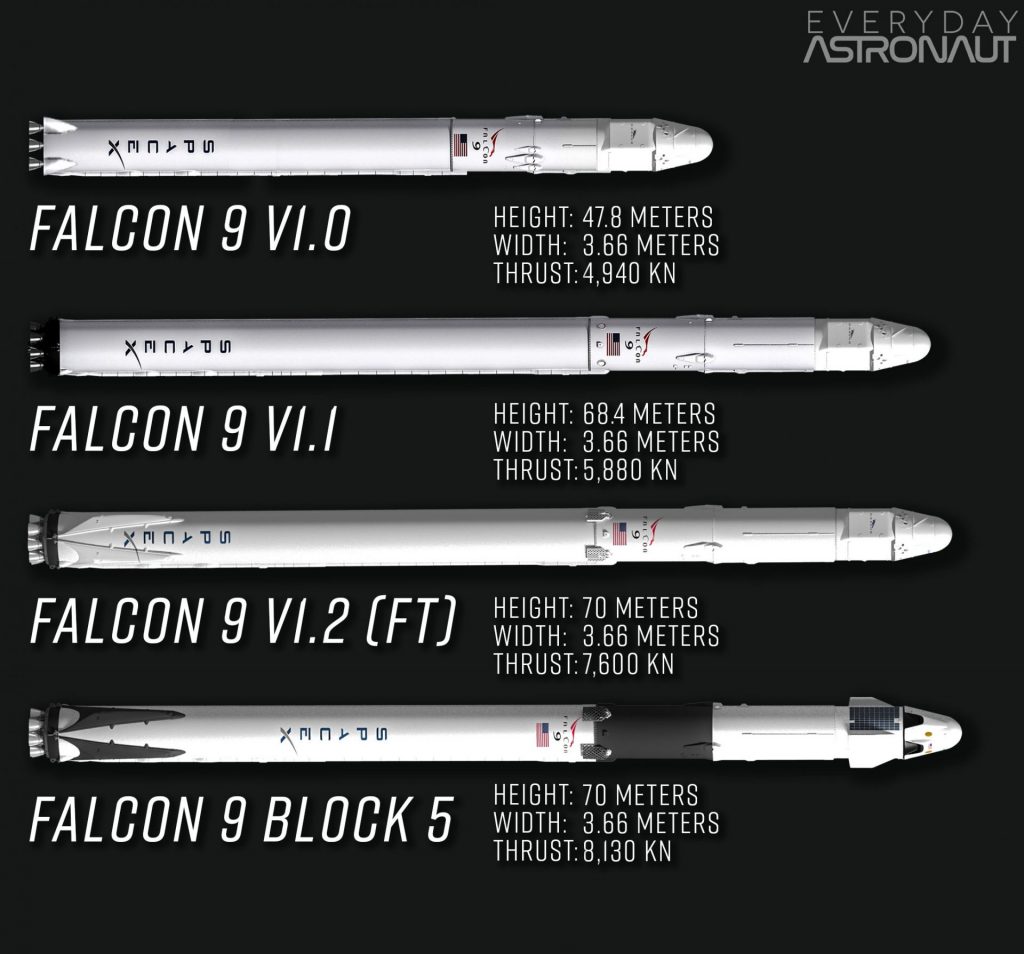
The Falcon 9 Block 5 is SpaceX’s partially reusable two-stage medium-lift launch vehicle. Block 5 is the final iteration of the Falcon 9; the goal is to apply all the lessons learned from 56 previous Falcon 9 pre-Block 5 flights into a human-rated reusable rocket. The Falcon 9 contains 3 main components: a reusable first stage, an expendable second stage, and a reusable fairing.
Block 5 updates:
SpaceX introduced a lot of changes on Block 5, allowing it to become the crewed-launching reusable rocket that we know today. To start, the Composite Overwrapped Pressure Vessel (COPV) had to undergo a complete redesign. NASA mandated the COPV redesign, as it had been the cause of both of the Falcon 9 failures: AMOS-6 and CRS-7.
Alongside with certification for human spaceflight, Block 5 came with a number of other major changes. To increase the amount of flight each booster could handle, and decrease the turnaround time, SpaceX reinforced the landing legs, upgraded the grid fins, and added a carbon fiber interstage. They also added heat resistant external paint and upgraded the engines. For more information about the changes in Block 5, and the other Blocks of the Falcon 9, check out this video by the Everyday Astronaut:

Falcon 9 Booster B1059
The booster supporting this mission is B1059. This booster has already flown four times. Its maiden flight was on the CRS-19 mission, which launched on December 5, 2019. It’s second flight was on the CRS-20 mission, which launched on March 7, 2020. Its third and fourth flight was on Starlink V1.0 L8 and on the SAOCOM 1B mission, launching on June 13, 2020 and August 30, 2020 respectively. As this is the boosters 5th flight, its designation will change to B1059.5.
Following stage separation, the Falcon 9 will conduct 3 burns. These burns will softly touch down the booster at LZ-1.

Fairing Reuse
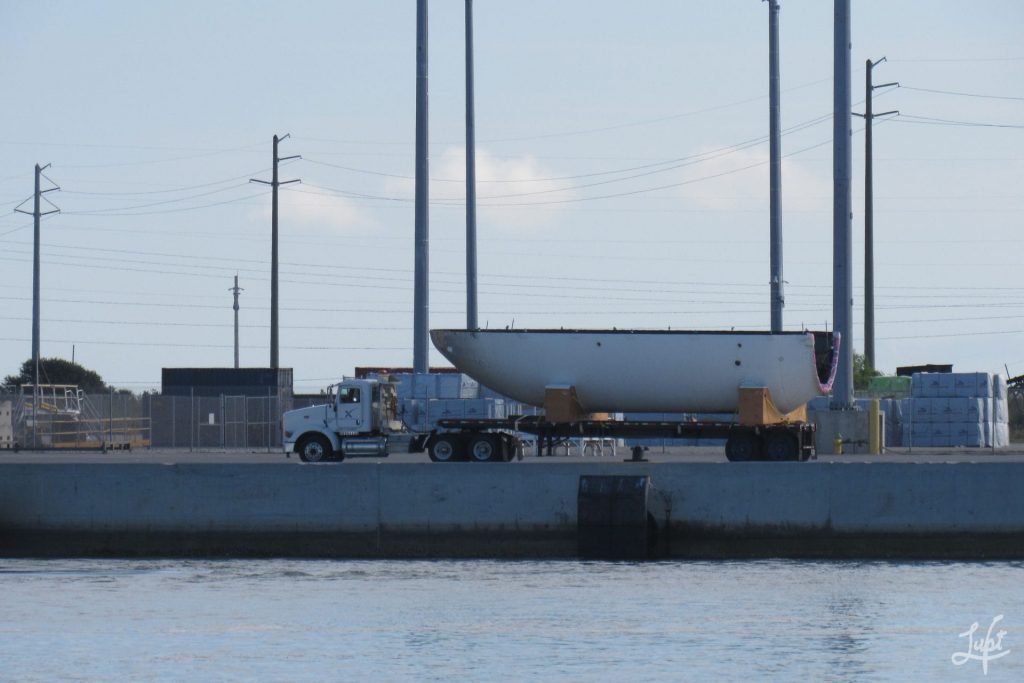
SpaceX is the first entity ever that recovers and reflies its fairings. The recovery vessels, Go Ms. Tree and Go Ms. Chief, will most likely attempt to recover the fairing halves. After being jettisoned, the two fairing halves will use cold gas thrusters to orientate themselves as they descend through the atmosphere. Once at a lower altitude, they will deploy parafoils to help them glide down to a soft landing for recovery.